DAILY EDITIONSaved PDFAll editionsChoose "Save as PDF" as the printer

Kibra News Network

Community journalism from Kibra to the world
Today’s lead

EXCLUSIVE: Nairobi Securities Exchange to relocate headquarters

The Nairobi Securities Exchange is preparing to move its headquarters, according to an exclusive report by The Kenyan Wallstreet. What a headquarters move does and does...

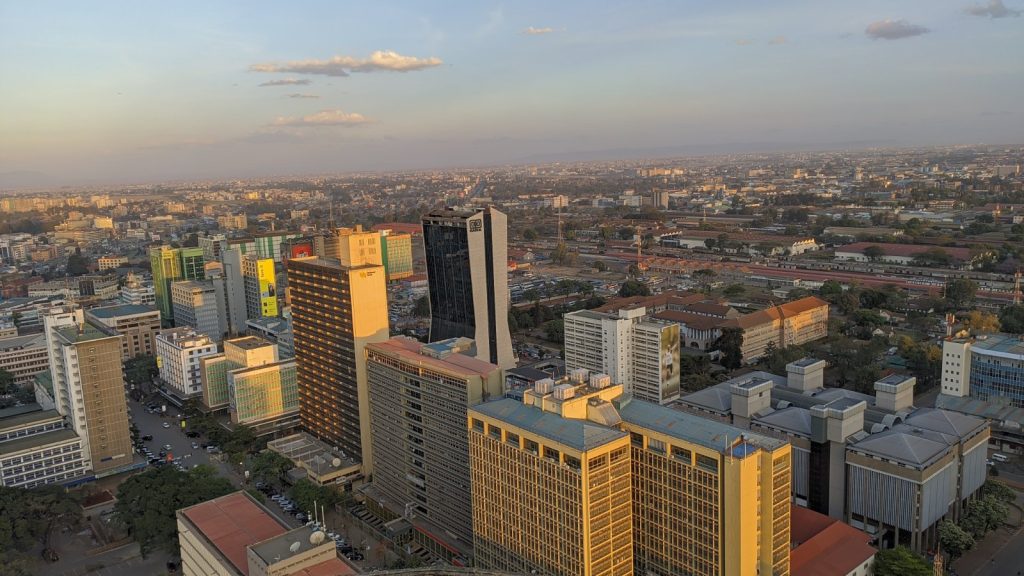
Office towers and low-rise blocks fill Nairobi's central business district, seen from above at golden hour
Office blocks fill Nairobi’s central business district at golden hour, seen from the KICC rooftop. The Kenyan Wallstreet first reported the exchange’s plan to change premises. Photo: Lebu Ayiga/Wikimedia Commons (CC BY-SA 4.0)

The Nairobi Securities Exchange is preparing to move its headquarters, according to an exclusive report by The Kenyan Wallstreet. What a headquarters move does and does not mean Trading at the exchange has been electronic for years, so the building is no longer where the market happens.

A move is a decision about cost, space and image rather than about how shares change hands. That is worth saying plainly, because a relocation story is easily read as a signal about the health of the market when it is usually a property decision.

The questions that matter are the ordinary ones: what the new premises cost against the old, who owns them, and whether the move was competitively procured. The market behind the address The exchange itself is listed, which means its own shareholders see the cost of a move.

It has spent recent years trying to widen participation: new listings have been thin, turnover leans heavily on a handful of large counters and on foreign investors, and retail Kenyans hold most of their savings in SACCOs, money market funds and land rather than shares.

Efforts to change that, from mobile sold government bonds to unit trusts marketed on phones, have...

Reported with material from google-analytics.com

Also inside this edition

  • US military families face deportation after immigration protection ends
  • Airtel’s Nxtra data centre in Kenya on track for July 2027
  • Uganda: WHO Defends Uganda’s Early Declaration of End to Ebola Outbreak
  • Outrage as Ugandan football captain murdered in street gang attack
  • Malawi: Mutharika Departs for South Africa As Reports On Trip Spark Uncertainty
  • Malawi: ‘Wait Until 2030!’ Malawi’s Mutharika Warns Rivals Plotting to Replace Him
Kibra News Network2026-08-06Page 1 of 5
Kibra and Nairobi
US military families face deportation after immigration protection ends
Photo: Al Jazeera

US military families face deportation after immigration protection ends

The spouses and parents of US service members have been reportedly detained or deported. How the protection worked For years the United States operated discretionary arrangements that allowed the immediate relatives of serving military personnel and veterans to remain in the country while their status was regularised, on the reasoning that a service member should not be deployed while a spouse or parent faces removal.

Because those arrangements were administrative rather than statutory, they could be narrowed or withdrawn without new legislation. When such a protection lapses, the effect is immediate. People who were compliant, known to the authorities and appearing for scheduled check ins become removable, and their visibility is what makes them easy to detain.

Why immigrant families are exposed Mixed status households are common wherever migration is long established. One member is a citizen, another has residence, a third is waiting on a petition that has been...


Rows of server racks inside a data centre (file photo)
Server racks in a data centre. File photo, illustrative. Photo: BalticServers.com / Wikimedia Commons (CC BY-SA 3.0)

Airtel’s Nxtra data centre in Kenya on track for July 2027

Airtel's Nxtra data centre in Kenya remains on course to open in July 2027, according to Africa Business Communities. Why Kenya keeps attracting data centres Kenya has become one of the busiest markets in Africa for data centre construction.

The pull is a mix of undersea cable landings on the coast, a large base of mobile money and digital services, relatively high renewable generation on the grid, and the fact that regional companies increasingly want their data stored in the region rather than in Europe.

The pressures are just as consistent: the price and reliability of power, the cost of imported equipment, and the long wait between an announcement and a facility that is actually taking customers. The rules that decide where data sits Kenya's data protection law and the office of the data commissioner set conditions on how personal data is handled and moved, and government has pushed for...

The World Health Organisation headquarters building in Geneva seen from the street
The World Health Organisation headquarters stands in Geneva. WHO defended Uganda’s decision to declare its Ebola Bundibugyo outbreak over before the conventional 42-day waiting period ended. Photo: Yann Forget/Wikimedia Commons (CC BY-SA 3.0)

Uganda: WHO Defends Uganda’s Early Declaration of End to Ebola Outbreak

Kampala, Uganda -- The World Health Organisation (WHO) has defended Uganda's decision to declare the end of its Ebola Bundibugyo outbreak before completing the conventional 42-day waiting period, saying the country remained focused on the primary objective of halting transmission and protecting public health.

What the 42 day rule is An Ebola outbreak is conventionally declared over after 42 days without a new confirmed case, counted from the last possible exposure. The number is two incubation periods of 21 days, a deliberate margin of safety rather than a bureaucratic ritual.

Declaring the end of an outbreak before that window closes is therefore a judgement call, and it invites exactly the scrutiny it is now receiving. The counter argument, which the health agency is making, is that the objective is stopping transmission, and that surveillance continues after any declaration.

Why the declaration date matters Declarations have consequences beyond epidemiology. They lift...

Kibra News Network2026-08-06Page 2 of 5
Across Kenya
Two footballers challenge for the ball on a dusty pitch (file photo)
Two footballers challenge for the ball on a dusty pitch. File photo. Photo: Twin edits / Wikimedia Commons (CC BY-SA 4.0)

Outrage as Ugandan football captain murdered in street gang attack

The 27-year-old was beaten to death by suspected robbers after resisting an attempt to steal his belongings, police say. A death that lands on a whole club When a young footballer is killed, a squad loses more than a captain.

Community clubs in East Africa are held together by two or three people who organise transport, chase kit, keep the register and talk parents into letting their children train. Losing one of them can end a team's season, and sometimes the team.

Reporting on a killing responsibly also means resisting the pull of detail. The facts of the attack are for the police and the courts, and the family is entitled to grieve without a running commentary. The risk that surrounds evening football Across the region the same pattern shows up in different cities.

Training and matches end after dark, players walk home through unlit routes carrying phones and boots,...

Malawian President Peter Mutharika seated in a formal chair wearing a dark suit
Peter Mutharika sits for an official portrait. The Malawian president left for South Africa on what his office called a private visit, his fourth in seven months. Photo: Foreign and Commonwealth Office (OGL v1.0)

Malawi: Mutharika Departs for South Africa As Reports On Trip Spark Uncertainty

President Peter Mutharika has jetted off to South Africa yet again -- his fourth "private visit" in barely seven months -- fuelling fresh speculation about what exactly is so private when the traveller is the Head of State.

Why presidential travel is a public matter A head of state does not travel privately in any meaningful sense. Whoever holds the office carries command authority, and most constitutions in the region deal with absence by providing for a deputy to act, or for specific powers to be exercised in the president's absence.

That is why the routine disclosure of travel, dates and who is in charge is treated as basic administration rather than as gossip. When those details are not published, speculation fills the space, and the speculation is usually less accurate than the disclosure would have been.

How this is normally handled Most governments publish a short notice: the destination,...

The low white Parliament building of Malawi in Lilongwe behind an open green lawn
Malawi’s Parliament building stands in Lilongwe. President Peter Mutharika said he had no plans to step aside before 2030. Photo: Timon Zingg/Wikimedia Commons (CC BY-SA 3.0)

Malawi: ‘Wait Until 2030!’ Malawi’s Mutharika Warns Rivals Plotting to Replace Him

President Peter Mutharika has hit out at those he claims are angling for his job, insisting he has no plans to step aside before 2030 - as he boarded a flight to South Africa for yet another unexplained 'private visit'. What a succession fight is really about A leader stating that he will not leave before a given year is speaking to his own party rather than to the electorate.

Ruling parties in the region tend to fracture over the same three things: who controls the nomination machinery, who controls the party finances, and whether an ageing incumbent can be persuaded to name a successor while he still has leverage.

Public warnings to rivals are usually a sign that the internal process has already broken down, because a party with a working succession mechanism does not need them. The pattern across the region Where a succession is managed openly, parties...

Kibra News Network2026-08-06Page 3 of 5
Africa and the world
DP Kindiki Heads to Dar es Salaam for Continental Infrastructure Summit
Photo: Capital FM Kenya

Kenya engages EAC diaspora leaders on consular services, trade and welfare

Kenya has held talks with diaspora leaders in the East African region on consular services, trade and the welfare of citizens abroad, The Kenyan Diaspora Media reports. Why diaspora policy is household policy Money sent home by Kenyans abroad is one of the country's largest sources of foreign exchange, bigger in most years than any single export.

It does not arrive as a national statistic. It arrives as school fees, rent, a hospital bill, stock for a kiosk, and the deposit on a plot. That is why consular services, dispute resolution and repatriation arrangements are not diplomatic niceties.

They decide whether a household keeps its income when something goes wrong for the person sending it. The part that goes wrong The complaints that reach us are consistent: recruitment agents who charge for jobs that do not exist, contracts signed in Nairobi and torn up on arrival, passports held by employers,...

Kenyan currency (file photo)
Photo: Ephymbaya / Wikimedia Commons, CC BY-SA 4.0

Govt Seeks KSh58 Billion Emergency Loan To Shield Kenyans From El Niño And Iran War

The government is seeking a KSh58 billion emergency loan to cushion Kenyans against El Nino rains and the economic effects of the Iran war, The Kenya Times reports. Two shocks that arrive in the same household Heavy rain and a war in the Gulf sound like unrelated stories until you look at a family budget in Kibra.

Rain means flooded rooms, blocked drains, damaged stock and a spike in diarrhoeal illness and malaria. A conflict on the oil routes means fuel, and fuel means matatu fares, cooking gas, kerosene and the price of everything trucked into a market.

Emergency borrowing is a response to both at once, which is also why it is difficult to track. Money borrowed against a broad shock can be spent almost anywhere. What borrowing costs later Kenya already spends a large share of ordinary revenue on servicing debt, which is the reason development budgets are...

The Gothic stone facade and towers of the Bombay High Court building in Mumbai
The Bombay High Court stands in Mumbai. Its Goa bench overturned a 2021 trial court verdict that had cleared Tarun Tejpal of all charges. Photo: A.Savin/Wikimedia Commons (Free Art License)

Indian journalist Tarun Tejpal convicted in rape case

The Goa bench of the Bombay High Court overturned a 2021 trial court verdict clearing Tejpal of all charges. What an appellate reversal means An acquittal overturned on appeal is not a retrial of the facts in public. An appellate court examines whether the trial court applied the law correctly, whether it weighed the evidence properly, and whether it relied on reasoning the law does not permit, such as assumptions about how a survivor ought to have behaved.

Reversals in sexual offence cases frequently turn on exactly that last point. Further appeal is normally available, and reporting should be careful to say what stage a case has reached rather than treating any single ruling as the end.

How these cases are reported KNN does not publish details of the offence, and it does not identify survivors of sexual violence. That is both a legal position in Kenya and an editorial...

Kibra News Network2026-08-06Page 4 of 5
More news
Patients sit waiting on chairs in the open waiting area of a Kenyan health facility
Patients sit waiting on chairs in the open waiting area of a Kenyan health facility. File photo. Photo: Njoki Ngari/Wikimedia Commons (CC BY-SA 4.0)

Tharaka Nithi Nurses to Resume Duty Thursday Despite the Nationwide Strike

Nurses in Tharaka Nithi County will resume work on Thursday after the county branch of the Kenya National Union of Nurses (KNUN) directed its members to return to duty in compliance with an active court order, even as the nationwide nurses' strike remains in force.

Why a strike ends in one county and continues elsewhere Health is a devolved function, so nurses are employed by 47 different county governments while national unions bargain over pay and terms. That is why industrial action fragments.

A county branch can be ordered back to work by a court, or reach its own settlement, while the national dispute stays live. The recurring issues are the same everywhere: collective bargaining agreements signed and not implemented, promotions frozen, risk and uniform allowances unpaid, staff hired on short contracts, and salary delays.

What it means for patients During strikes the load shifts to the facilities still open,...

A Kenyan General Service Unit officer stands on duty among a crowd at a Nairobi rally
A Kenyan General Service Unit officer stands on duty among a crowd at a Nairobi rally. File photo. Photo: Kengitau254/Wikimedia Commons (CC BY-SA 4.0)

Sifuna Wants Police Guaranteed Right to Vote While On Election Duty

Nairobi Senator Edwin Sifuna has raised concerns regarding the constitutional right to vote for serving police and security officers deployed away from their registered stations during elections. The problem he is describing Voting in Kenya happens at the polling station where you registered.

Police officers and other security personnel are deployed on election day to wherever they are needed, which is frequently hundreds of kilometres from that station. The result is that a large group of public servants secures an election they cannot take part in.

The same issue affects election officials, some medical staff on duty and prisoners, and it has been raised before every recent general election without a settled solution. What the options are Two remedies are usually proposed.

Early or special voting for officers on duty, which has been used in some jurisdictions and requires the commission to run a separate secure process days ahead. Or...

Kibra News Network2026-08-06Page 5 of 5