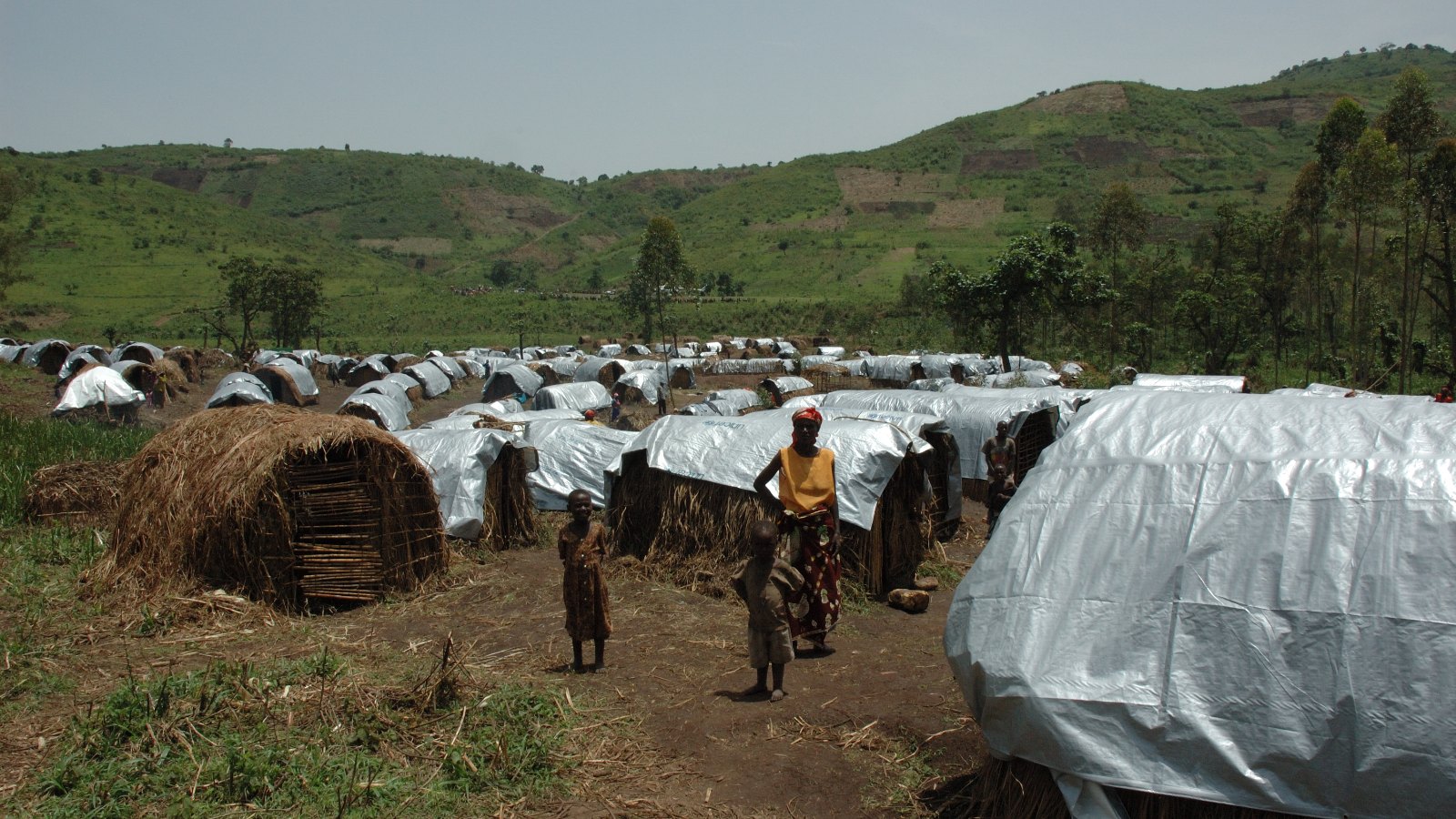
Tarpaulin shelters fill a displacement camp in eastern DR Congo. Ebola has now been detected in camps housing displaced families. Photo: Julien Harneis/Wikimedia Commons (CC BY-SA 2.0)
Listen to this article2 min listenAI voice
Tap play to hear this story
You are listening to Kibra News Network.
DR Congo: Ebola virus reaches displacement camps.
Agencies are on high alert amid reports that the rapidly spreading Ebola Bundibugyo virus species in the Democratic Republic of the Congo (DRC) has infected 19 internally displaced people, killed five of them, according to the UN's refugee agency (UNHCR).
Background
Displacement camps are the hardest possible setting for an Ebola response. Transmission happens through contact with body fluids, so the measures that work are isolation, safe burial and contact tracing, and all three depend on space, water and trust. Camps have very little of the first two, and the trust question is acute where residents have already been displaced by violence and have reason to be wary of officials. The Bundibugyo species is one of several within the Ebola family, and the availability of a vaccine differs between them, which affects what a response can actually deploy.
Why it matters here
East Africa has learned this repeatedly through Uganda and the DRC, and Kenya sits on the transport corridors that connect them. Kenyan screening at border points and at the airport is the visible part of the response; the more important part is whether health facilities can isolate a suspected case without exposing everyone in the waiting room. In a dense settlement such as Kibra, the practical defence is early reporting and the community health promoter network rather than anything that happens at a border.
What to watch next
Whether the outbreak is contained inside the camps, which vaccine or treatment protocol is available for this species, and whether regional screening is stepped up.
This story was put together by K N N from material first published by AllAfrica News: Latest.
That was a Kibra News Network report, read by an A I voice.
Agencies are on high alert amid reports that the rapidly spreading Ebola Bundibugyo virus species in the Democratic Republic of the Congo (DRC) has infected 19 internally displaced people, killed five of them, according to the UN's refugee agency (UNHCR).
Background
Displacement camps are the hardest possible setting for an Ebola response. Transmission happens through contact with body fluids, so the measures that work are isolation, safe burial and contact tracing, and all three depend on space, water and trust. Camps have very little of the first two, and the trust question is acute where residents have already been displaced by violence and have reason to be wary of officials. The Bundibugyo species is one of several within the Ebola family, and the availability of a vaccine differs between them, which affects what a response can actually deploy.
Why it matters here
East Africa has learned this repeatedly through Uganda and the DRC, and Kenya sits on the transport corridors that connect them. Kenyan screening at border points and at the airport is the visible part of the response; the more important part is whether health facilities can isolate a suspected case without exposing everyone in the waiting room. In a dense settlement such as Kibra, the practical defence is early reporting and the community health promoter network rather than anything that happens at a border.
What to watch next
Whether the outbreak is contained inside the camps, which vaccine or treatment protocol is available for this species, and whether regional screening is stepped up.