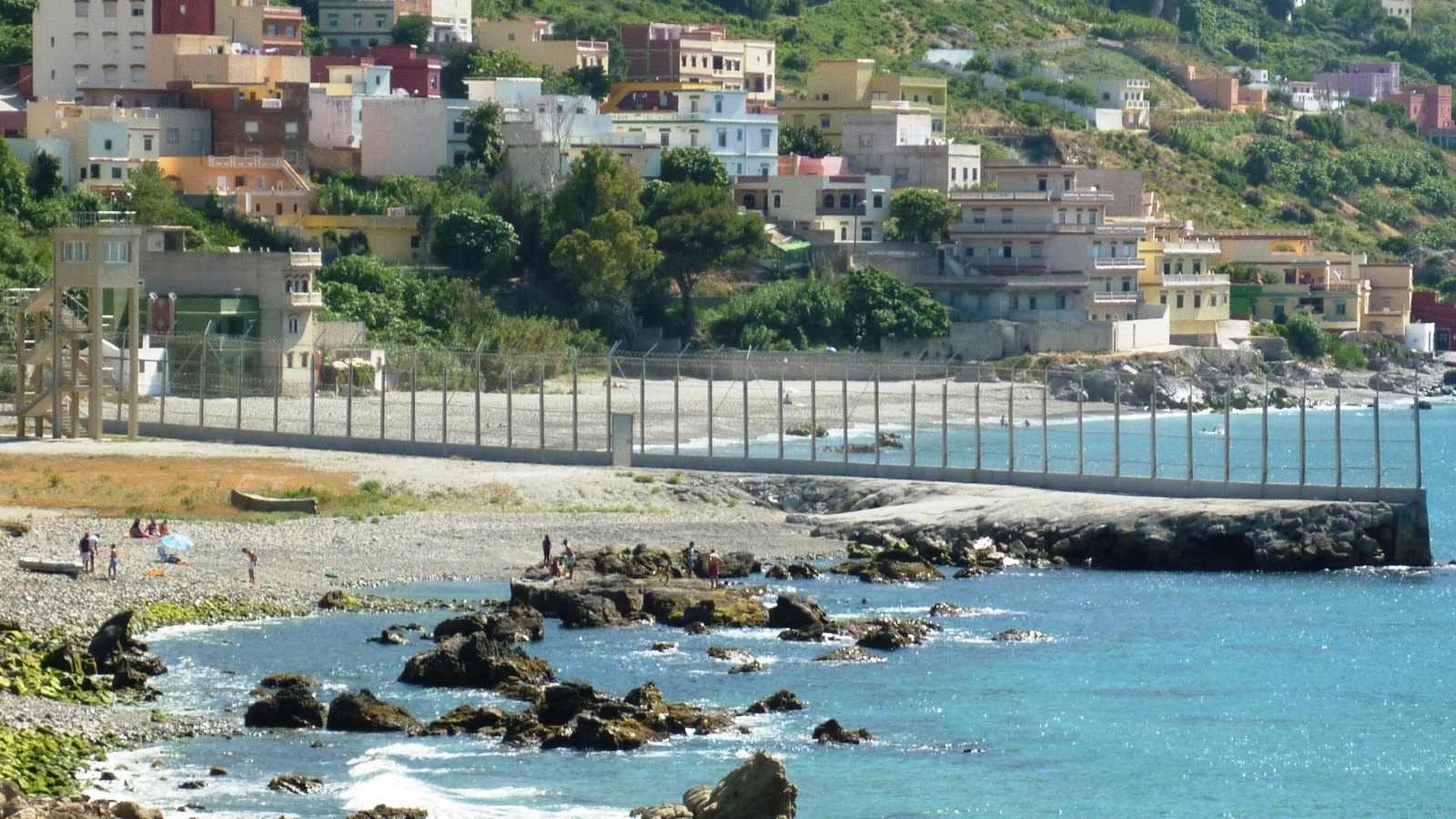
The steel border fence separating Ceuta from Morocco running along the coast. File photo. Photo: Mario Sánchez Bueno/Wikimedia Commons (CC BY-SA 2.0)
Listen to this article2 min listenAI voice
Tap play to hear this story
You are listening to Kibra News Network.
Thousands of migrants still in Ceuta after border crisis, local leader says.
The Spanish territory's mayor-president also says 100 deaths occurred as a result of 78,000 migrants crossing from neighbouring Morocco.
Background
Ceuta is one of only two land borders between the European Union and Africa, and crossings there tend to come in surges rather than a steady flow, driven by a shift in policing on the Moroccan side as much as by conditions further south. What follows a surge is a reception problem: a small city with limited shelter capacity has to house, feed and process people while their claims are assessed, and minors, who cannot lawfully be returned in the same way as adults, complicate every stage. Casualty figures in these episodes are contested and usually revised.
Why it matters here
Kenya is on the other end of the same migration system. Kenyans travel for work through the Gulf and to Europe, and the country hosts one of Africa's largest refugee populations at Dadaab and Kakuma, where the same questions about shelter capacity, documentation and the treatment of unaccompanied minors arise. The difference is visibility: Ceuta is photographed, and Kenya's camps mostly are not.
What to watch next
Whether the casualty figures are independently verified, how the people still in Ceuta are accommodated, and what Spain and Morocco agree about the border.
This story was put together by K N N from material first published by BBC News.
That was a Kibra News Network report, read by an A I voice.
The Spanish territory's mayor-president also says 100 deaths occurred as a result of 78,000 migrants crossing from neighbouring Morocco.
Background
Ceuta is one of only two land borders between the European Union and Africa, and crossings there tend to come in surges rather than a steady flow, driven by a shift in policing on the Moroccan side as much as by conditions further south. What follows a surge is a reception problem: a small city with limited shelter capacity has to house, feed and process people while their claims are assessed, and minors, who cannot lawfully be returned in the same way as adults, complicate every stage. Casualty figures in these episodes are contested and usually revised.
Why it matters here
Kenya is on the other end of the same migration system. Kenyans travel for work through the Gulf and to Europe, and the country hosts one of Africa’s largest refugee populations at Dadaab and Kakuma, where the same questions about shelter capacity, documentation and the treatment of unaccompanied minors arise. The difference is visibility: Ceuta is photographed, and Kenya’s camps mostly are not.
What to watch next
Whether the casualty figures are independently verified, how the people still in Ceuta are accommodated, and what Spain and Morocco agree about the border.