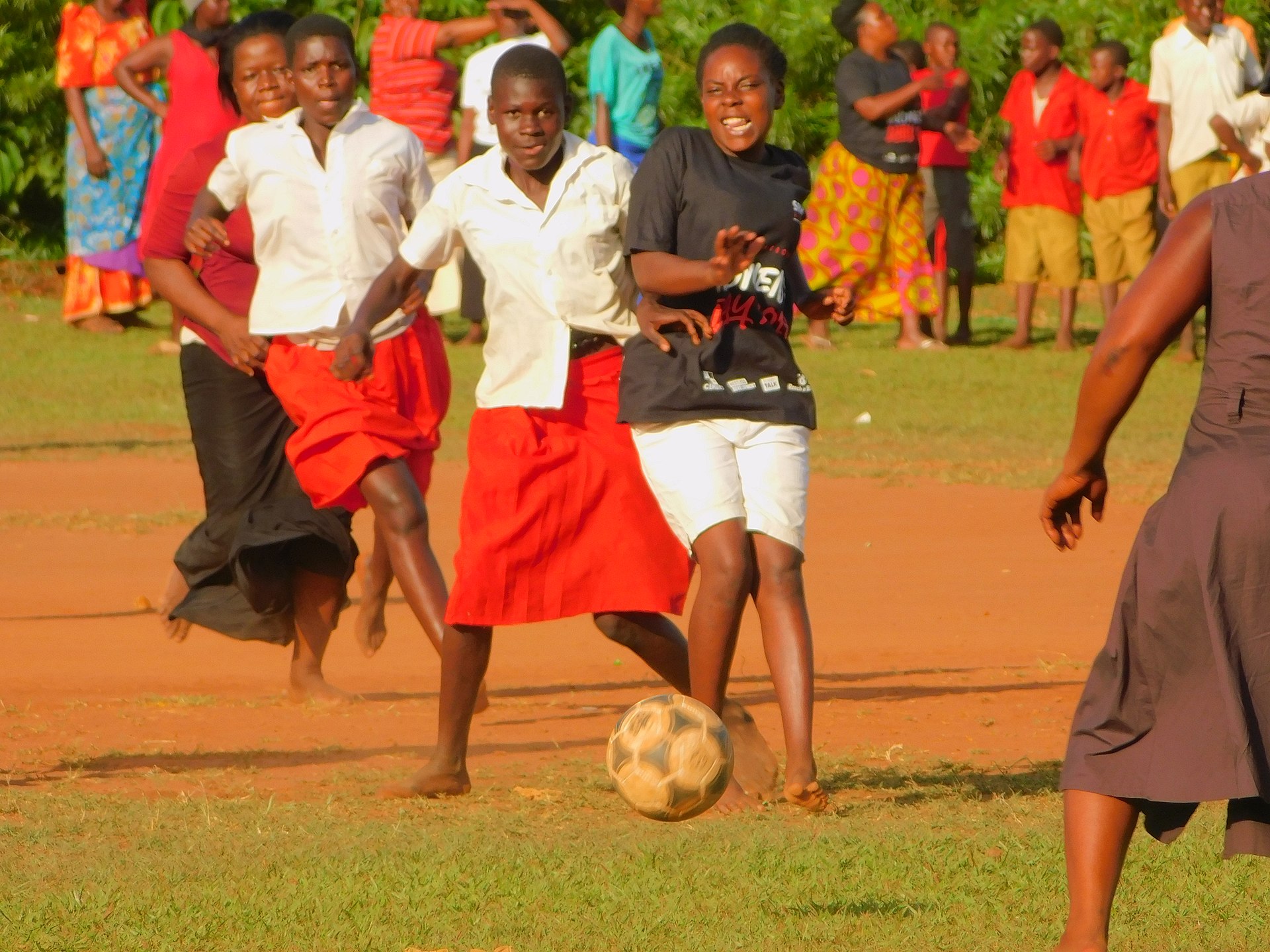
Photo: Nicemusana / Wikimedia Commons, CC BY-SA 4.0
Listen to this article3 min listenAI voice
Tap play to hear this story
You are listening to Kibra News Network.
Women’s football in Kibera: the fastest-growing game in the ward.
Twenty years ago a girl playing football in Kibera was an argument waiting to happen. Today there are school teams, academy sides, community clubs and a steady flow of players moving into the national set-up from Nairobi's informal settlements. The change has been faster than almost anything else in Kenyan sport, and it has happened with very little money.
What is driving it
The academies did the groundwork. Kibera Girls Soccer Academy has for years combined football with secondary education, which changed the conversation with parents. A team that keeps a girl in school is not a distraction from her future; it is the mechanism.
Harambee Starlets gave it a ceiling. Visible national-team football matters. A player who can name women in the shirt has a target that a player in 2005 did not.
Safety in numbers. Organised training is one of the few structured, supervised activities available to teenage girls in the ward outside school hours, and a lot of parents have worked that out.
What is still in the way
Pitch access. Where ground is scarce, women's teams get the worst slots. Training at first light or last light creates its own safety problem.
Kit and equipment. Boots are the single biggest barrier reported by coaches, followed by sports bras and shin pads. These are not glamorous fundraising items and they are chronically short.
Menstrual health. Attendance drops for entirely predictable reasons in programmes that do not supply sanitary products and do not have a private changing space. The ones that do supply them report the drop closing.
Coaching. Most women's sides in the ward are coached by men, often well, but the shortage of qualified women coaches limits both the football and the pastoral side.
Money after school. The drop-off point is eighteen. Players leave school, need income, and the game does not pay. Kenyan women's football is still largely amateur, and a talented twenty-year-old in Kibera has to choose.
The cheap fixes
Coaches in the ward are consistent about what would help most, and none of it is a stadium. A boot bank, so that players are not sharing sizes. A secured daytime training slot. A women's coaching-badge cohort. And transport money for away fixtures, which is the reason teams forfeit more often than anything happening on the pitch.
Get in touch
If you run a girls' or women's team in Kibra, KNN wants your fixtures, your results and your team news. Write to news@kibranewsnetwork.co.ke.
That was a Kibra News Network report, read by an A I voice.
Twenty years ago a girl playing football in Kibera was an argument waiting to happen. Today there are school teams, academy sides, community clubs and a steady flow of players moving into the national set-up from Nairobi’s informal settlements. The change has been faster than almost anything else in Kenyan sport, and it has happened with very little money.
What is driving it
The academies did the groundwork. Kibera Girls Soccer Academy has for years combined football with secondary education, which changed the conversation with parents. A team that keeps a girl in school is not a distraction from her future; it is the mechanism.
Harambee Starlets gave it a ceiling. Visible national-team football matters. A player who can name women in the shirt has a target that a player in 2005 did not.
Safety in numbers. Organised training is one of the few structured, supervised activities available to teenage girls in the ward outside school hours, and a lot of parents have worked that out.
What is still in the way
Pitch access. Where ground is scarce, women’s teams get the worst slots. Training at first light or last light creates its own safety problem.
Kit and equipment. Boots are the single biggest barrier reported by coaches, followed by sports bras and shin pads. These are not glamorous fundraising items and they are chronically short.
Menstrual health. Attendance drops for entirely predictable reasons in programmes that do not supply sanitary products and do not have a private changing space. The ones that do supply them report the drop closing.
Coaching. Most women’s sides in the ward are coached by men, often well, but the shortage of qualified women coaches limits both the football and the pastoral side.
Money after school. The drop-off point is eighteen. Players leave school, need income, and the game does not pay. Kenyan women’s football is still largely amateur, and a talented twenty-year-old in Kibera has to choose.
The cheap fixes
Coaches in the ward are consistent about what would help most, and none of it is a stadium. A boot bank, so that players are not sharing sizes. A secured daytime training slot. A women’s coaching-badge cohort. And transport money for away fixtures, which is the reason teams forfeit more often than anything happening on the pitch.
Get in touch
If you run a girls’ or women’s team in Kibra, KNN wants your fixtures, your results and your team news. Write to news@kibranewsnetwork.co.ke.