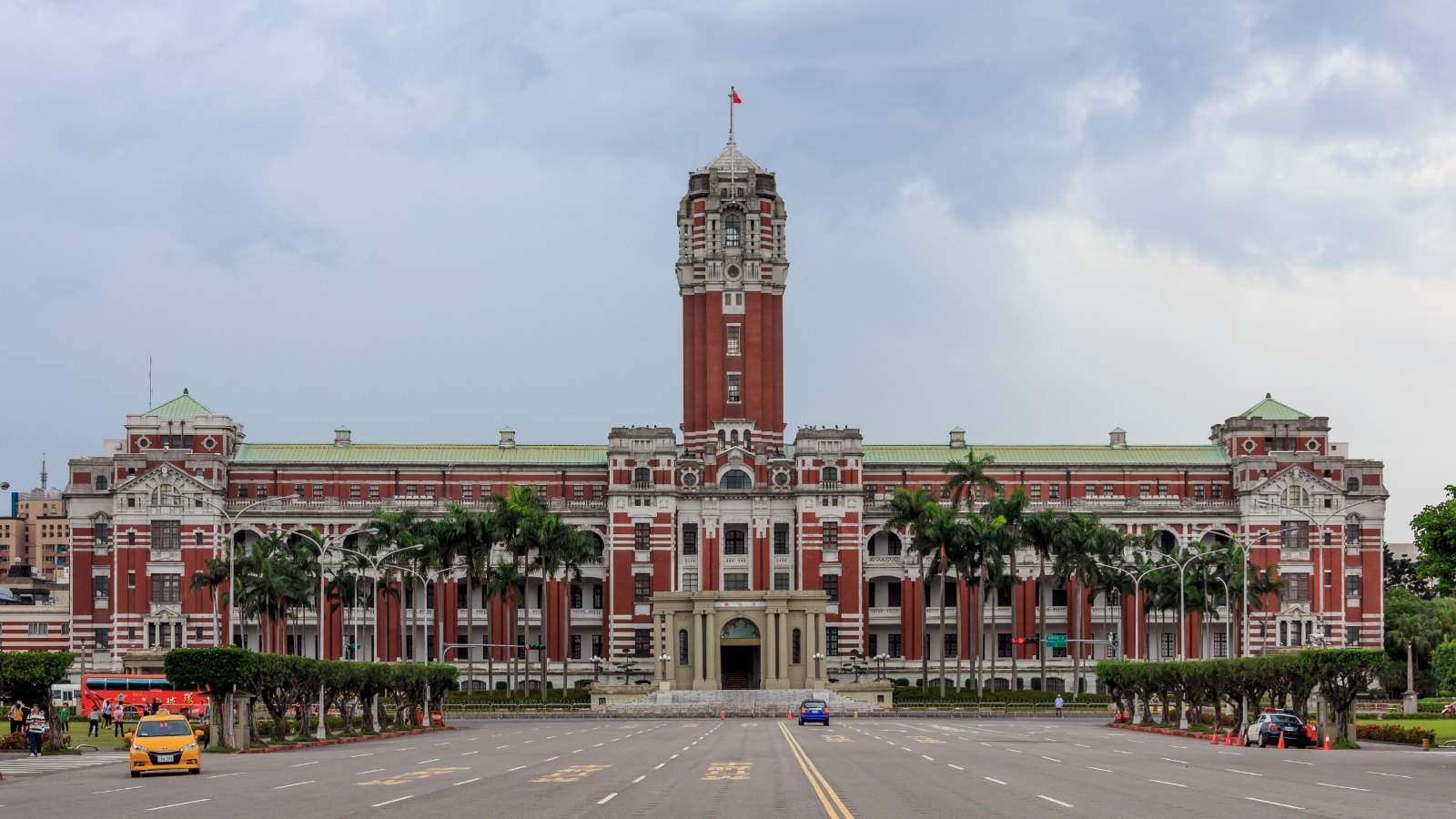
The Presidential Office Building stands in central Taipei. Taiwan’s president was evacuated overnight in an incident that has raised questions. Photo: CEphoto, Uwe Aranas/Wikimedia Commons (CC BY-SA 3.0)
Listen to this article2 min listenAI voice
Tap play to hear this story
You are listening to Kibra News Network.
Why was Taiwan’s president evacuated in the middle of the night?
President William Lai took part in an emergency evacuation drill as part of Taiwan military exercises preparing for a potential Chinese invasion.
Background
Evacuation drills for a head of state are a standard part of continuity-of-government planning, and running one at night is deliberate, because the point is to test the parts of the system that are hardest to activate: duty rosters, communications when key staff are asleep, and the handover of authority if the leader is unreachable. Publicising the drill is a separate decision, and usually a signal aimed at both a domestic audience and an external one.
Why it matters here
Kenya has its own continuity questions, and they are rarely rehearsed in public. The Constitution sets out succession and the handling of a presidential vacancy, and the country has tested parts of that framework in the courts, but the operational side, who does what in the first hour of a crisis, is not something Kenyans see. The value of publicising a drill is that it turns an abstract constitutional provision into something citizens know exists.
What to watch next
Whether the exercise becomes a regular published event, and what it signals about the wider security posture in the region.
This story was put together by K N N from material first published by BBC News.
That was a Kibra News Network report, read by an A I voice.
President William Lai took part in an emergency evacuation drill as part of Taiwan military exercises preparing for a potential Chinese invasion.
Background
Evacuation drills for a head of state are a standard part of continuity-of-government planning, and running one at night is deliberate, because the point is to test the parts of the system that are hardest to activate: duty rosters, communications when key staff are asleep, and the handover of authority if the leader is unreachable. Publicising the drill is a separate decision, and usually a signal aimed at both a domestic audience and an external one.
Why it matters here
Kenya has its own continuity questions, and they are rarely rehearsed in public. The Constitution sets out succession and the handling of a presidential vacancy, and the country has tested parts of that framework in the courts, but the operational side, who does what in the first hour of a crisis, is not something Kenyans see. The value of publicising a drill is that it turns an abstract constitutional provision into something citizens know exists.
What to watch next
Whether the exercise becomes a regular published event, and what it signals about the wider security posture in the region.