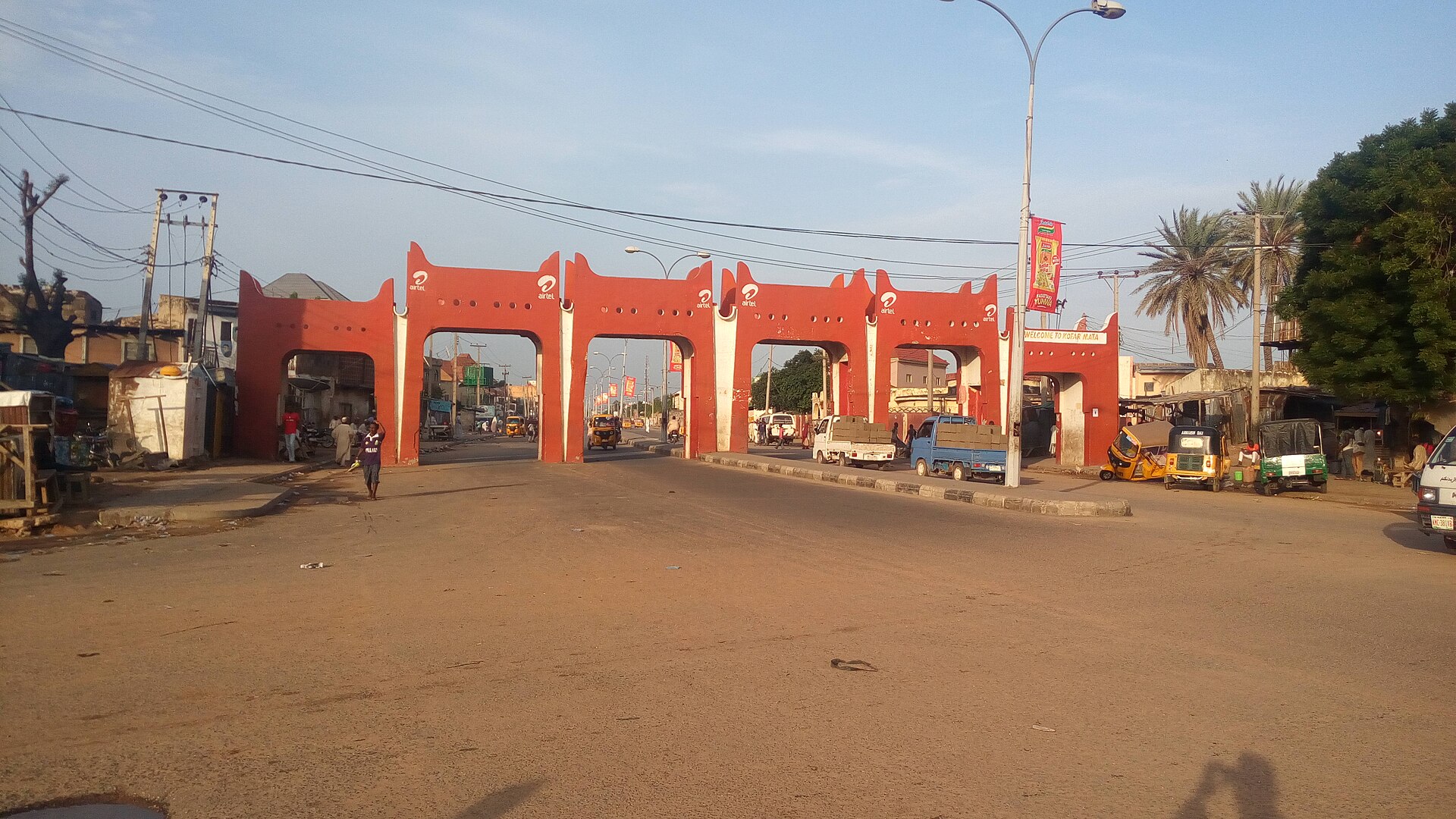
The Kofar Mata city gate in Kano, Nigeria. File photo. Photo: Suleiman Umar, Aminu Abdullahi, Abubakar Yusuf, www.kanostreetsonosm.org.ng/Wikimedia Commons (CC BY-SA 4.0)
Listen to this article2 min listenAI voice
Tap play to hear this story
You are listening to Kibra News Network.
Nigeria’s mass wedding – and how telling lovers from fraudsters is proving tricky.
The scheme is for couples who cannot afford the significant financial costs associated with marriage.
Background
Mass weddings organised by state governments, religious foundations and philanthropists have become a recognised feature of public life in parts of northern Nigeria. They exist because the cost of marrying, principally the bride price and the ceremony itself, has moved beyond the reach of many young people, and because unmarried adults in conservative communities carry a social cost of their own. The recurring difficulty is screening. A scheme that offers to cover the cost of a marriage attracts applicants whose interest is the payment rather than the partner, and organisers have to build a vetting process without turning it into an intrusive investigation of every couple.
Why it matters here
The economics will be recognisable in Kibra. Marriage in Kenya carries its own layered costs, from dowry negotiations to the church or committee ceremony, and families routinely run a harambee to meet them. That system solves the same affordability problem and creates the same exposure: money raised on trust, disbursed quickly, with very little in the way of formal accounting. The fraud risk in Nigeria's scheme is the institutional version of a risk Kenyan families already manage informally.
What to watch next
What vetting process the organisers put in place, whether the scheme is independently audited, and whether the couples who take part are followed up afterwards.
This story was put together by K N N from material first published by BBC News.
That was a Kibra News Network report, read by an A I voice.
The scheme is for couples who cannot afford the significant financial costs associated with marriage.
Background
Mass weddings organised by state governments, religious foundations and philanthropists have become a recognised feature of public life in parts of northern Nigeria. They exist because the cost of marrying, principally the bride price and the ceremony itself, has moved beyond the reach of many young people, and because unmarried adults in conservative communities carry a social cost of their own. The recurring difficulty is screening. A scheme that offers to cover the cost of a marriage attracts applicants whose interest is the payment rather than the partner, and organisers have to build a vetting process without turning it into an intrusive investigation of every couple.
Why it matters here
The economics will be recognisable in Kibra. Marriage in Kenya carries its own layered costs, from dowry negotiations to the church or committee ceremony, and families routinely run a harambee to meet them. That system solves the same affordability problem and creates the same exposure: money raised on trust, disbursed quickly, with very little in the way of formal accounting. The fraud risk in Nigeria’s scheme is the institutional version of a risk Kenyan families already manage informally.
What to watch next
What vetting process the organisers put in place, whether the scheme is independently audited, and whether the couples who take part are followed up afterwards.