You are listening to Kibra News Network.
Top 10 places to visit in Kibera — and how to visit them well.
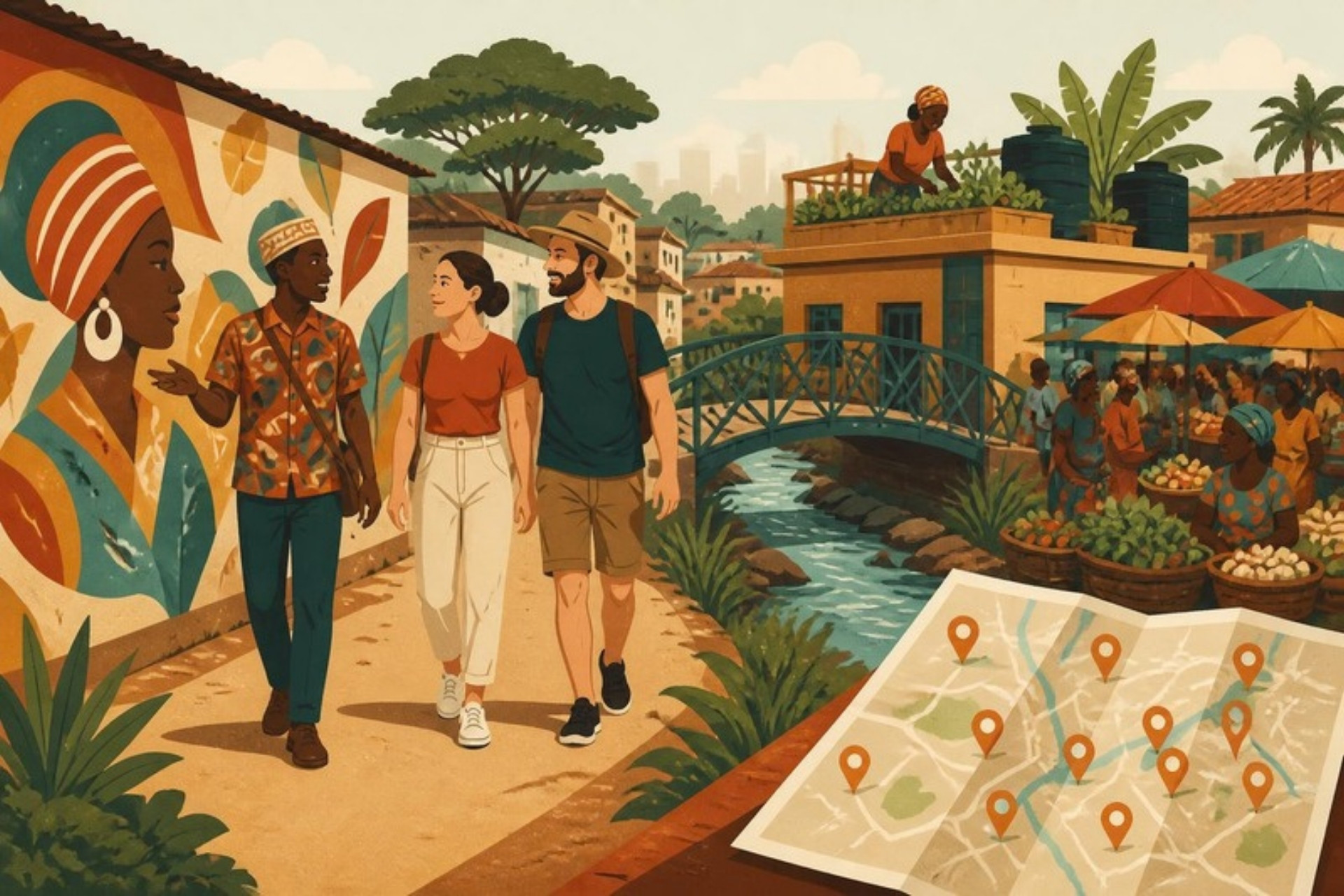
Kibera has been photographed more than almost any other neighbourhood in East Africa, and photographed badly more often than not. Visitors arrive expecting a spectacle and leave with a memory card full of other people's roofs. That is not a visit. It is extraction.
What follows is a different list. These are places in and around Kibera where something is actually happening, where a visitor is a customer, a guest or a participant rather than an observer, and where the money you spend stays in the ward. Read the etiquette section at the bottom before you set off.
1. Toi Market
On the Ngong Road edge of Kibera, Toi is one of Nairobi's great second-hand clothes markets and the reason a good deal of the city's wardrobe looks the way it does. Traders here buy mitumba bales, sort them and resell, and the stock turns over fast enough that regulars come weekly. Go early, go with cash in small denominations, and expect to bargain. Toi has burned down and rebuilt itself more than once, which tells you something about the people who trade there.
2. Makina and the Nubian quarter
Makina is where Kibera began. The settlement's name comes from the Nubian word for forest, and Nubian soldiers demobilised from the King's African Rifles were settled on this land in the early twentieth century. The Makina mosque, the older housing stock and the market give the village a distinct character. If you want to understand why Kibera exists at all, this is where the story starts.
3. Kibera Town Centre, Soweto East
Built by the Human Needs Project, the town centre bundles clean water, showers, laundry, a community hall and training rooms into one site. It is a working piece of infrastructure rather than a monument, and it demonstrates the model that a lot of Kibera organisations now follow: sell a service at a fair price, reinvest the margin locally.
4. The Kibera Public Space Project sites
Kounkuey Design Initiative has worked with residents to convert flood-prone riverbank plots along the Ngong River into public spaces with sanitation blocks, playgrounds, community halls and small business units. Several are scattered across the villages. They are among the few genuinely public, genuinely designed spaces in the settlement, and they were built with residents rather than for them.
5. The railway line
The old Nairobi to Kisumu line runs along the northern boundary of the settlement, and the strip beside it functions as a linear market, a footpath and a meeting place. Walking a stretch of it in daylight, with someone who lives there, gives you a better sense of Kibera's geography than any viewpoint.
6. The murals
Kibera has an established wall-painting tradition, from the Kibera Walls for Peace work that followed the 2007 to 2008 post-election violence through to newer commissions on shopfronts and community halls. The paintings are not decorative. They mark boundaries, carry public health messages and record what people wanted said in public.
7. The creative studios and the film school
The Hot Sun Foundation's Kibera Film School has trained camera operators, editors and directors from the settlement for years, and it sits within a wider ecosystem of music studios, photography collectives and design workshops. If you are visiting with any interest in media, ask to buy something, commission something or book a session rather than simply looking round.
8. The football pitches
On a Saturday the pitches at Kamukunji grounds and the smaller cleared spaces across the villages carry league fixtures, training sessions and crowds who take the result seriously. Turn up, stand on the touchline, buy a soda from the vendor working the game. It is the cheapest and most honest afternoon in the ward.
9. Olympic and Ayany
The estates on Kibera's northern edge are part of the same story and rarely appear in coverage of it. Olympic Primary School has one of the better-known names in Nairobi education. Walking from Ayany down into Kianda shows you the gradient between formal and informal housing more clearly than any statistic.
10. The Ngong River and Nairobi Dam edge
The southern boundary is where Kibera's environmental problems are most visible and where the most interesting restoration work is happening, from riverbank clean-ups to waste collection enterprises. It is not a beauty spot. It is the place to go if you want to understand what the ward is actually fighting.
How to visit well
Go with someone who lives there, and pay them properly for their time. Community-run walking tours exist and the fee is the point, not an inconvenience.
Ask before you photograph anyone. If the answer is no, that is the answer. Do not photograph children at all without a parent present and agreeing.
Spend money. Eat at a kibanda, buy from a stall, get your hair cut. A visitor who spends two thousand shillings across ten small businesses does more good than one who donates nothing and takes three hundred photographs.
Do not hand cash or sweets to children in the street. It creates exactly the dynamic that residents complain about.
Come back. The neighbourhoods that get treated best are the ones people return to.
That was a Kibra News Network report, read by an A I voice.
Kibera has been photographed more than almost any other neighbourhood in East Africa, and photographed badly more often than not. Visitors arrive expecting a spectacle and leave with a memory card full of other people’s roofs. That is not a visit. It is extraction.
What follows is a different list. These are places in and around Kibera where something is actually happening, where a visitor is a customer, a guest or a participant rather than an observer, and where the money you spend stays in the ward. Read the etiquette section at the bottom before you set off.
1. Toi Market
On the Ngong Road edge of Kibera, Toi is one of Nairobi’s great second-hand clothes markets and the reason a good deal of the city’s wardrobe looks the way it does. Traders here buy mitumba bales, sort them and resell, and the stock turns over fast enough that regulars come weekly. Go early, go with cash in small denominations, and expect to bargain. Toi has burned down and rebuilt itself more than once, which tells you something about the people who trade there.
2. Makina and the Nubian quarter
Makina is where Kibera began. The settlement’s name comes from the Nubian word for forest, and Nubian soldiers demobilised from the King’s African Rifles were settled on this land in the early twentieth century. The Makina mosque, the older housing stock and the market give the village a distinct character. If you want to understand why Kibera exists at all, this is where the story starts.
3. Kibera Town Centre, Soweto East
Built by the Human Needs Project, the town centre bundles clean water, showers, laundry, a community hall and training rooms into one site. It is a working piece of infrastructure rather than a monument, and it demonstrates the model that a lot of Kibera organisations now follow: sell a service at a fair price, reinvest the margin locally.
4. The Kibera Public Space Project sites
Kounkuey Design Initiative has worked with residents to convert flood-prone riverbank plots along the Ngong River into public spaces with sanitation blocks, playgrounds, community halls and small business units. Several are scattered across the villages. They are among the few genuinely public, genuinely designed spaces in the settlement, and they were built with residents rather than for them.
5. The railway line
The old Nairobi to Kisumu line runs along the northern boundary of the settlement, and the strip beside it functions as a linear market, a footpath and a meeting place. Walking a stretch of it in daylight, with someone who lives there, gives you a better sense of Kibera’s geography than any viewpoint.
6. The murals
Kibera has an established wall-painting tradition, from the Kibera Walls for Peace work that followed the 2007 to 2008 post-election violence through to newer commissions on shopfronts and community halls. The paintings are not decorative. They mark boundaries, carry public health messages and record what people wanted said in public.
7. The creative studios and the film school
The Hot Sun Foundation’s Kibera Film School has trained camera operators, editors and directors from the settlement for years, and it sits within a wider ecosystem of music studios, photography collectives and design workshops. If you are visiting with any interest in media, ask to buy something, commission something or book a session rather than simply looking round.
8. The football pitches
On a Saturday the pitches at Kamukunji grounds and the smaller cleared spaces across the villages carry league fixtures, training sessions and crowds who take the result seriously. Turn up, stand on the touchline, buy a soda from the vendor working the game. It is the cheapest and most honest afternoon in the ward.
9. Olympic and Ayany
The estates on Kibera’s northern edge are part of the same story and rarely appear in coverage of it. Olympic Primary School has one of the better-known names in Nairobi education. Walking from Ayany down into Kianda shows you the gradient between formal and informal housing more clearly than any statistic.
10. The Ngong River and Nairobi Dam edge
The southern boundary is where Kibera’s environmental problems are most visible and where the most interesting restoration work is happening, from riverbank clean-ups to waste collection enterprises. It is not a beauty spot. It is the place to go if you want to understand what the ward is actually fighting.
How to visit well
Go with someone who lives there, and pay them properly for their time. Community-run walking tours exist and the fee is the point, not an inconvenience.
Ask before you photograph anyone. If the answer is no, that is the answer. Do not photograph children at all without a parent present and agreeing.
Spend money. Eat at a kibanda, buy from a stall, get your hair cut. A visitor who spends two thousand shillings across ten small businesses does more good than one who donates nothing and takes three hundred photographs.
Do not hand cash or sweets to children in the street. It creates exactly the dynamic that residents complain about.
Come back. The neighbourhoods that get treated best are the ones people return to.
KNN Newsroom is the staff byline for stories written, rewritten and edited at the Kibra News Network desk. Where a story credits an outside outlet, the original source is linked at the foot of the piece.