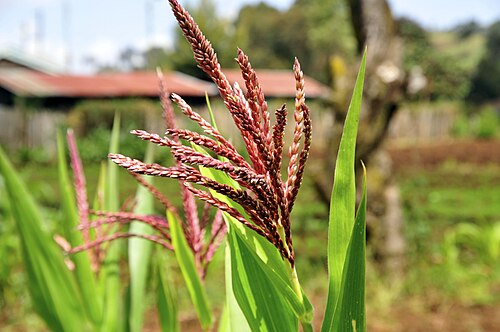
Maize growing on a farm in Kenya. File photo, illustrative. Photo: CIAT / Wikimedia Commons (CC BY-SA 2.0)
Listen to this article3 min listenAI voice
Tap play to hear this story
You are listening to Kibra News Network.
Drought, war in Ukraine changed what families in Kenya could afford to eat – research.
e Eastleigh Voice
Background
Kenyan households buy food in an economy that is more exposed to global markets than it often appears. Wheat, cooking oil and fertiliser are substantially imported, and staples that are grown locally still depend on imported inputs and on fuel prices for transport to market. When international supply is disrupted, the effect arrives at the retail stall with a short lag and tends to stay there long after the original shock has passed.
The combination researchers have been examining is a drought affecting domestic production at the same time as a disruption to global grain and edible oil supply. Each alone raises prices. Together they narrow what a household on a fixed or irregular income can put on the table, and the adjustment is rarely made by eating less overall. It is usually made by substituting: fewer proteins, less oil, smaller portions of vegetables, and greater reliance on the cheapest available carbohydrate.
Why it matters here
In Kibra, food is bought in small quantities and often daily, which means price changes are felt immediately rather than absorbed over a monthly shop. Buying a hundred shillings of flour at a time also carries a hidden premium, because small units cost more per kilo than bulk. Households that manage on daily earnings therefore absorb price rises faster and more sharply than the national inflation figure suggests.
What to watch next
The measures that matter for readers are the retail price of maize flour and cooking oil, the cost of a cylinder of cooking gas, and whether school feeding programmes are running. Those three move together and are a more honest indicator of household pressure than headline inflation.
This story was put together by K N N from material first published by The Eastleigh Voice.
That was a Kibra News Network report, read by an A I voice.
Drought, war in Ukraine changed what families in Kenya could afford to eat – research The Eastleigh Voice
Background
Kenyan households buy food in an economy that is more exposed to global markets than it often appears. Wheat, cooking oil and fertiliser are substantially imported, and staples that are grown locally still depend on imported inputs and on fuel prices for transport to market. When international supply is disrupted, the effect arrives at the retail stall with a short lag and tends to stay there long after the original shock has passed.
The combination researchers have been examining is a drought affecting domestic production at the same time as a disruption to global grain and edible oil supply. Each alone raises prices. Together they narrow what a household on a fixed or irregular income can put on the table, and the adjustment is rarely made by eating less overall. It is usually made by substituting: fewer proteins, less oil, smaller portions of vegetables, and greater reliance on the cheapest available carbohydrate.
Why it matters here
In Kibra, food is bought in small quantities and often daily, which means price changes are felt immediately rather than absorbed over a monthly shop. Buying a hundred shillings of flour at a time also carries a hidden premium, because small units cost more per kilo than bulk. Households that manage on daily earnings therefore absorb price rises faster and more sharply than the national inflation figure suggests.
What to watch next
The measures that matter for readers are the retail price of maize flour and cooking oil, the cost of a cylinder of cooking gas, and whether school feeding programmes are running. Those three move together and are a more honest indicator of household pressure than headline inflation.
KNN Newsroom is the staff byline for stories written, rewritten and edited at the Kibra News Network desk. Where a story credits an outside outlet, the original source is linked at the foot of the piece.