



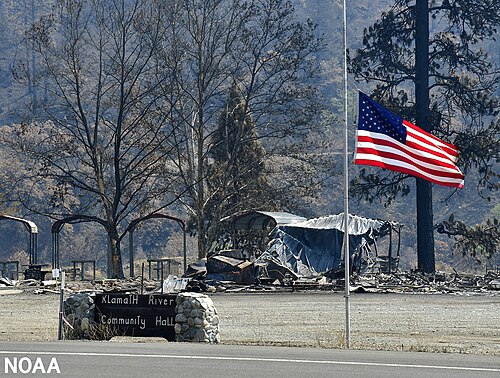
One Spokane resident tells the BBC she realised the immense danger when she heard the fire had jumped over the river.
Background
Communities across the western United States have adapted to fire as a seasonal fact, with evacuation routines, defensible space around properties and emergency alert systems that residents know how to use. What repeatedly overwhelms that preparation is speed. Fires driven by strong winds through dry fuel can cross terrain that residents assume will hold them, including rivers, highways and cleared ground, and the interval between a fire being distant and a fire being immediate collapses to minutes.
Fire scientists describe this as a shift in fire behaviour rather than simply in fire frequency. Longer dry seasons, accumulated fuel loads and hotter conditions produce blazes that generate their own wind and spot far ahead of the main front. The result is that experience becomes an unreliable guide, which is why long-time residents of fire-prone areas are often the most shaken by these events.
Why it matters here
Kenya’s fire risk profile is different but the underlying lesson about warning time is not. Forest and grassland fires in the Mau, Aberdares and on Mount Kenya, and urban fires in dense settlements including Kibera, all turn on how quickly people are warned and how quickly they can move. Kenyan urban fires have repeatedly shown that narrow access lanes and limited water supply matter more to the outcome than the size of the initial fire.
What to watch next
In cases like this the questions that follow are about warning systems and evacuation orders: whether alerts reached residents, how much time they had, and whether the fire behaved in ways forecasts did not anticipate. Those reviews usually take months and are where the useful lessons sit.
Read the full report at BBC News
Source: BBC News