



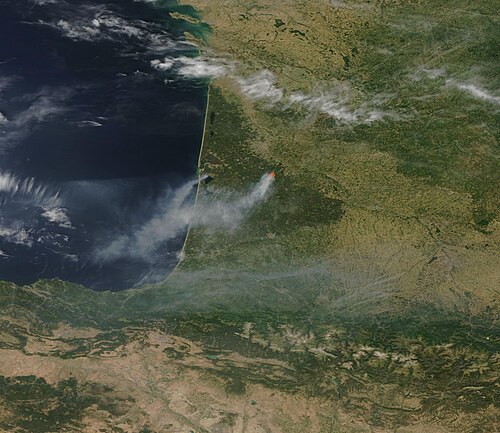
The government is trying to attribute blame for the unprecedented fires which tore through the country last month.
Background
Southern Europe’s fire season has lengthened and intensified, and France is now dealing with fires on a scale it once associated mainly with Spain, Portugal and Greece. Investigations after a large fire almost always turn up a mixture of causes: a small number of deliberate ignitions, a much larger number of accidental ones from machinery, cigarettes, power lines and agricultural burning, and the underlying conditions that decide how far any spark travels. Arrest totals released early in an inquiry usually cover all of those categories at once, which is why they are easy to misread as evidence of mass arson.
Why it matters here
Kenya’s fire risk is different in shape but identical in logic. Forest and grassland fires in the Aberdares, on Mount Kenya and in the Mau, and the dense-settlement fires that periodically sweep through Nairobi’s informal areas including Kibra, are all events in which the ignition is the smallest part of the story and the conditions are the largest. The response after a Kibra fire tends to follow the same pattern: intense attention on who started it, far less on hydrant coverage, access roads, electrical connections and building materials.
What to watch next
Whether the French inquiry separates deliberate ignition from accidental cause in its final figures, and whether the policy response that follows concentrates on prosecution or on land management, vegetation clearance and building rules.
Read the full report at BBC News
Source: BBC News