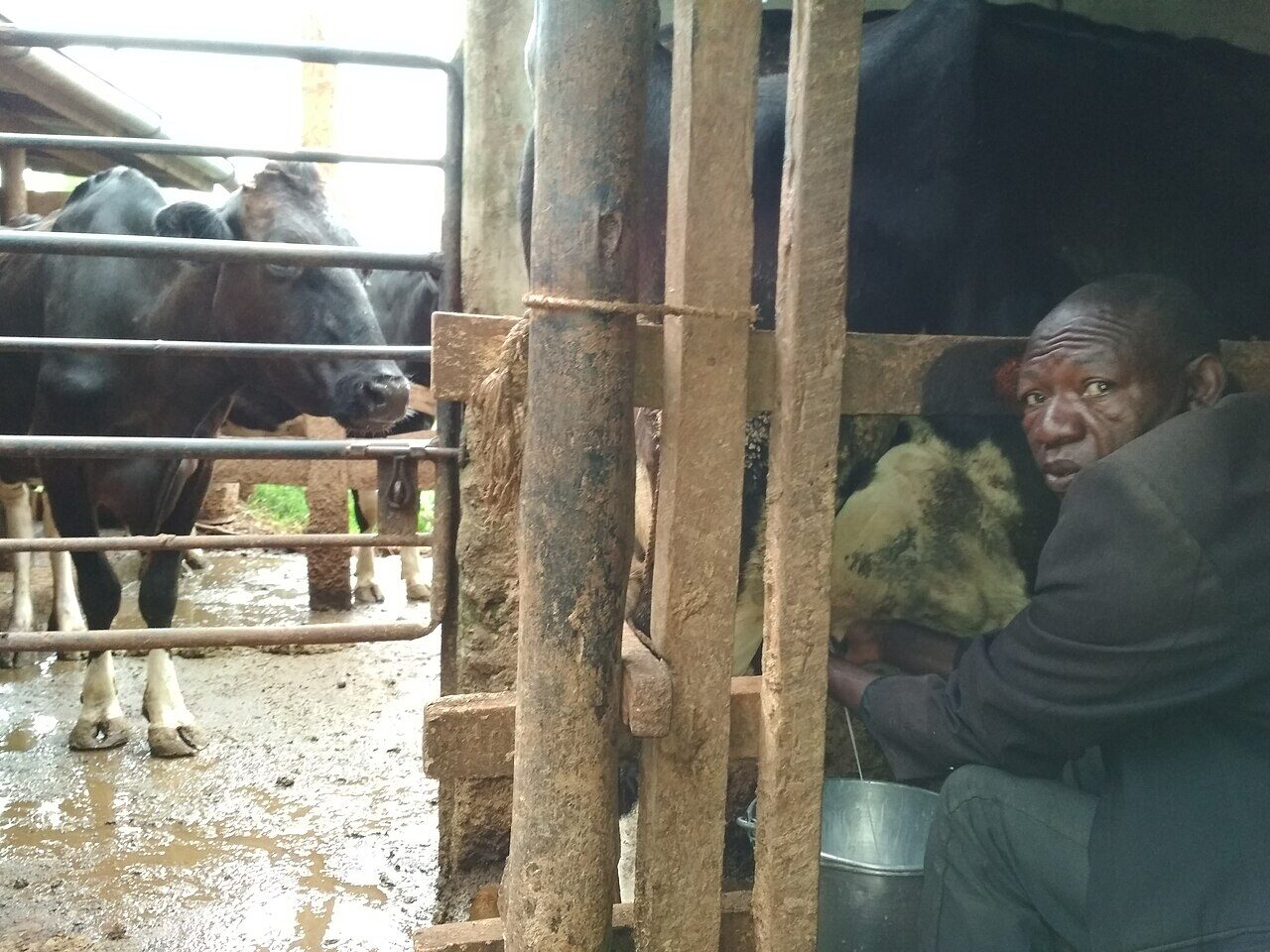
A farmer milking a dairy cow by hand in Kenya (file). Photo: Maina Pat Mbae via Wikimedia Commons (CC BY-SA 4.0)
Listen to this article2 min listenAI voice
Tap play to hear this story
You are listening to Kibra News Network.
Milk deliveries fall as drought bites North Rift farms.
Kenya's milk shortage is deepening, with deliveries to processors falling as drought cuts the supply of animal feed in dairy-farming areas.
Formal milk deliveries dropped 3.7 per cent between June and July, from 84.4 million to 81.3 million litres, industry figures show. In the North Rift, feed prices have risen from about Sh1,800 to Sh2,400 a bag, and hay prices have more than doubled. At Lelcheggo Cooperative, daily deliveries have fallen from about 10,000 litres to under 2,000.
Principal Secretary for Livestock Development Jonathan Mueke said the shortage comes down to lack of rain rather than any other cause. "The real issue is fodder pressure due to lack of rains, and we need to ensure that our cows do not go hungry," he said.
Government response
Cabinet Secretary Mutahi Kagwe warned Kenya could turn to imports if the drought persists, while Kenya Dairy Board chairman Genesio Mugo played down the scale of the problem, calling it "minimal" and saying "there is no cause for alarm." The government is allowing yellow maize into animal feed, monitoring milk movement through the Dairy Board, and studying a preservation fund to store milk from good seasons for use in dry spells.
A 500ml packet already costs Sh53 to Sh60 in North Rift areas. If the shortage spreads, prices for maziwa in Nairobi estates, including Kibera, are likely to climb, and cooperative chairman Stanley Ngombe said low supply "works against economies of scale, considering high electricity costs."
Sources: The Star; People Daily
That was a Kibra News Network report, read by an A I voice.
Kenya’s milk shortage is deepening, with deliveries to processors falling as drought cuts the supply of animal feed in dairy-farming areas.
Formal milk deliveries dropped 3.7 per cent between June and July, from 84.4 million to 81.3 million litres, industry figures show. In the North Rift, feed prices have risen from about Sh1,800 to Sh2,400 a bag, and hay prices have more than doubled. At Lelcheggo Cooperative, daily deliveries have fallen from about 10,000 litres to under 2,000.
Principal Secretary for Livestock Development Jonathan Mueke said the shortage comes down to lack of rain rather than any other cause. “The real issue is fodder pressure due to lack of rains, and we need to ensure that our cows do not go hungry,” he said.
Government response
Cabinet Secretary Mutahi Kagwe warned Kenya could turn to imports if the drought persists, while Kenya Dairy Board chairman Genesio Mugo played down the scale of the problem, calling it “minimal” and saying “there is no cause for alarm.” The government is allowing yellow maize into animal feed, monitoring milk movement through the Dairy Board, and studying a preservation fund to store milk from good seasons for use in dry spells.
A 500ml packet already costs Sh53 to Sh60 in North Rift areas. If the shortage spreads, prices for maziwa in Nairobi estates, including Kibera, are likely to climb, and cooperative chairman Stanley Ngombe said low supply “works against economies of scale, considering high electricity costs.”
KNN Newsroom is the staff byline for stories written, rewritten and edited at the Kibra News Network desk. Where a story credits an outside outlet, the original source is linked at the foot of the piece.