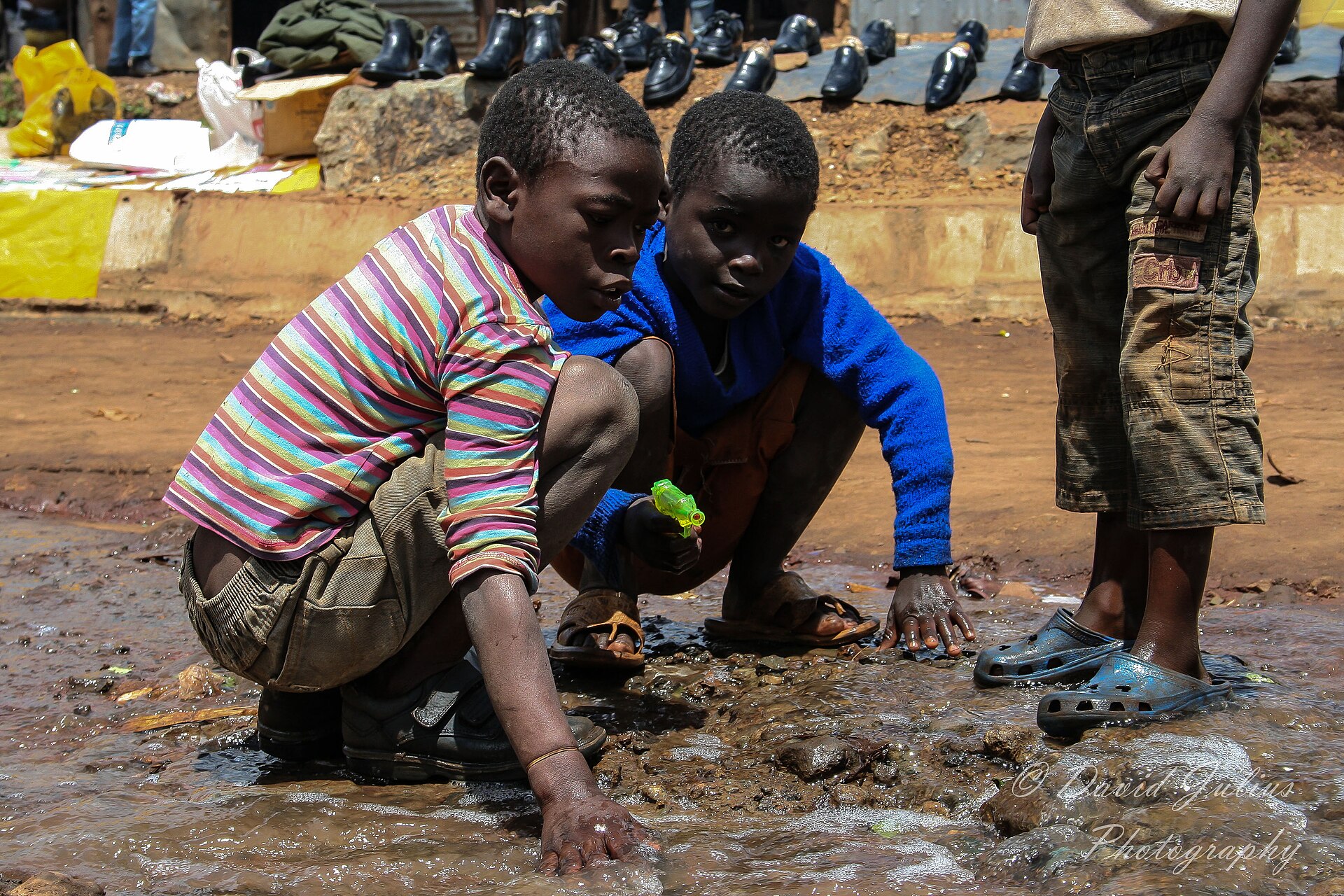
Photo: Mutungadavid / Wikimedia Commons, CC BY-SA 4.0
Listen to this article3 min listenAI voice
Tap play to hear this story
You are listening to Kibra News Network.
Half the women surveyed in Kibra had no water in the previous 24 hours.
A study of 1,068 women in Kibra found that 53.6% had no access to water in the previous 24 hours, and 49.9% had no access to a toilet.
The research was published in the Journal of Global Health, with data collected in 2024 from women aged 15 to 49 across seven of Kibra's twelve informal villages.
Only three women in the entire sample had water inside the household. The rest relied on outside taps and public wells, and beyond them on vendors, tankers and burst pipes.
The 24-hour framing matters. This is not a count of connections. It is a measure of whether the water was actually there yesterday – which is what residents experience.
The study's main finding was a link between lack of access and intimate partner violence: prevalence was 71.6% among women without water against 56.5% among those with it, and 72.0% without sanitation against 60.1% with.
Two cautions on the numbers. The sample is women of reproductive age in seven of twelve villages, not the whole population, so this is not a statement that half of Kibera has no water. And it is one study.
On the supply side, Kibera is named as one of four target settlements in Nairobi's simplified sewer programme, alongside Mukuru, Mathare and Kawangware. So far the published delivery is 3km of sewer in Mukuru Kwa Reuben, serving about 10,000 households. No Kibera kilometre figure, household figure, budget or date has been published.
The new Zone B estate in Soweto East will run on two boreholes rather than a mains connection. For an estate of more than 4,000 units, that is a choice worth explaining.
This story was put together by K N N from material first published by Journal of Global Health.
That was a Kibra News Network report, read by an A I voice.
A study of 1,068 women in Kibra found that 53.6% had no access to water in the previous 24 hours, and 49.9% had no access to a toilet.
The research was published in the Journal of Global Health, with data collected in 2024 from women aged 15 to 49 across seven of Kibra’s twelve informal villages.
Only three women in the entire sample had water inside the household. The rest relied on outside taps and public wells, and beyond them on vendors, tankers and burst pipes.
The 24-hour framing matters. This is not a count of connections. It is a measure of whether the water was actually there yesterday — which is what residents experience.
The study’s main finding was a link between lack of access and intimate partner violence: prevalence was 71.6% among women without water against 56.5% among those with it, and 72.0% without sanitation against 60.1% with.
Two cautions on the numbers. The sample is women of reproductive age in seven of twelve villages, not the whole population, so this is not a statement that half of Kibera has no water. And it is one study.
On the supply side, Kibera is named as one of four target settlements in Nairobi’s simplified sewer programme, alongside Mukuru, Mathare and Kawangware. So far the published delivery is 3km of sewer in Mukuru Kwa Reuben, serving about 10,000 households. No Kibera kilometre figure, household figure, budget or date has been published.
The new Zone B estate in Soweto East will run on two boreholes rather than a mains connection. For an estate of more than 4,000 units, that is a choice worth explaining.
KNN Newsroom is the staff byline for stories written, rewritten and edited at the Kibra News Network desk. Where a story credits an outside outlet, the original source is linked at the foot of the piece.