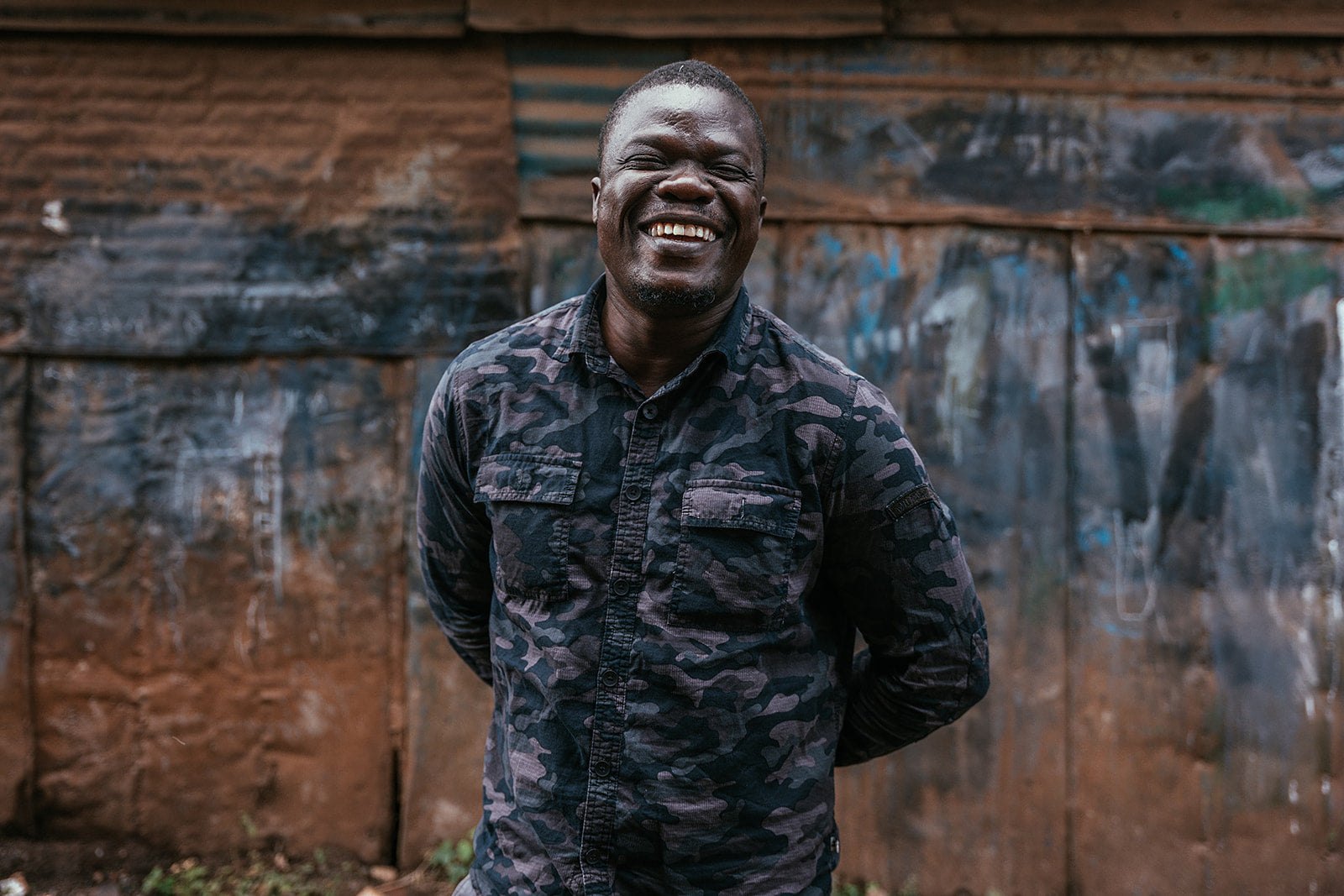
Jack Nyawanga, founder of Victorious Bones Crafts. Photo: Obakki
Listen to this article2 min listenAI voice
Tap play to hear this story
You are listening to Kibra News Network.
Victorious Bones: the Kibera workshop that turns butchery waste into jewellery sold in Finland.
Kibera Creatives is a KNN series on the artists, designers and performers who built their names from Kibera. Profiles are compiled from published reports and the subjects' own public pages; sources are listed at the end. Spotted an error? Write to news@kibranewsnetwork.co.ke.
Victorious Bones Crafts makes necklaces, earrings, rings, bowls and cutlery from things other people throw away: cow, goat and camel bones, horn, recycled brass and wood collected from Kibera's streets, butcheries and slaughterhouses. The collective was founded in 2006 by Jack Nyawanga, then 18, who has lived in Kibera since he was a toddler.
"We saw an opportunity with bones from the animals," he told OkayAfrica in 2022. The group began as the Victorious Youth Group, became the Victorious Craft Group and is registered with the Ministry of Gender and Social Services.
Training and exports
Training is free. CGTN reported in 2019 that 89 young people from Kibera had been trained, and the collective has also trained 60 refugees in Dadaab with Swedish government support. The team was about 20 people in 2019 and 12 designers in 2022, after four left during COVID-19.
Pieces sell for roughly US$5 to US$15, with custom orders from US$200. The collective has exported to Finland and Canada, sells at the Maasai Market in Nairobi and is listed as a Kibera artisan partner by the Canadian brand Obakki. CNN covered the workshop as early as 2013.
"Our biggest competitors are big companies who have borrowed the idea," Nyawanga told Face2Face Africa in 2019.
Sources: OkayAfrica, 30 Aug 2022; CGTN, 31 Dec 2019; Face2Face Africa, 9 Apr 2019; Nairobi News; Obakki; CNN, 11 Sep 2013.
That was a Kibra News Network report, read by an A I voice.
Kibera Creatives is a KNN series on the artists, designers and performers who built their names from Kibera. Profiles are compiled from published reports and the subjects’ own public pages; sources are listed at the end. Spotted an error? Write to news@kibranewsnetwork.co.ke.
Victorious Bones Crafts makes necklaces, earrings, rings, bowls and cutlery from things other people throw away: cow, goat and camel bones, horn, recycled brass and wood collected from Kibera’s streets, butcheries and slaughterhouses. The collective was founded in 2006 by Jack Nyawanga, then 18, who has lived in Kibera since he was a toddler.
“We saw an opportunity with bones from the animals,” he told OkayAfrica in 2022. The group began as the Victorious Youth Group, became the Victorious Craft Group and is registered with the Ministry of Gender and Social Services.
Training and exports
Training is free. CGTN reported in 2019 that 89 young people from Kibera had been trained, and the collective has also trained 60 refugees in Dadaab with Swedish government support. The team was about 20 people in 2019 and 12 designers in 2022, after four left during COVID-19.
Pieces sell for roughly US$5 to US$15, with custom orders from US$200. The collective has exported to Finland and Canada, sells at the Maasai Market in Nairobi and is listed as a Kibera artisan partner by the Canadian brand Obakki. CNN covered the workshop as early as 2013.
“Our biggest competitors are big companies who have borrowed the idea,” Nyawanga told Face2Face Africa in 2019.
KNN Newsroom is the staff byline for stories written, rewritten and edited at the Kibra News Network desk. Where a story credits an outside outlet, the original source is linked at the foot of the piece.