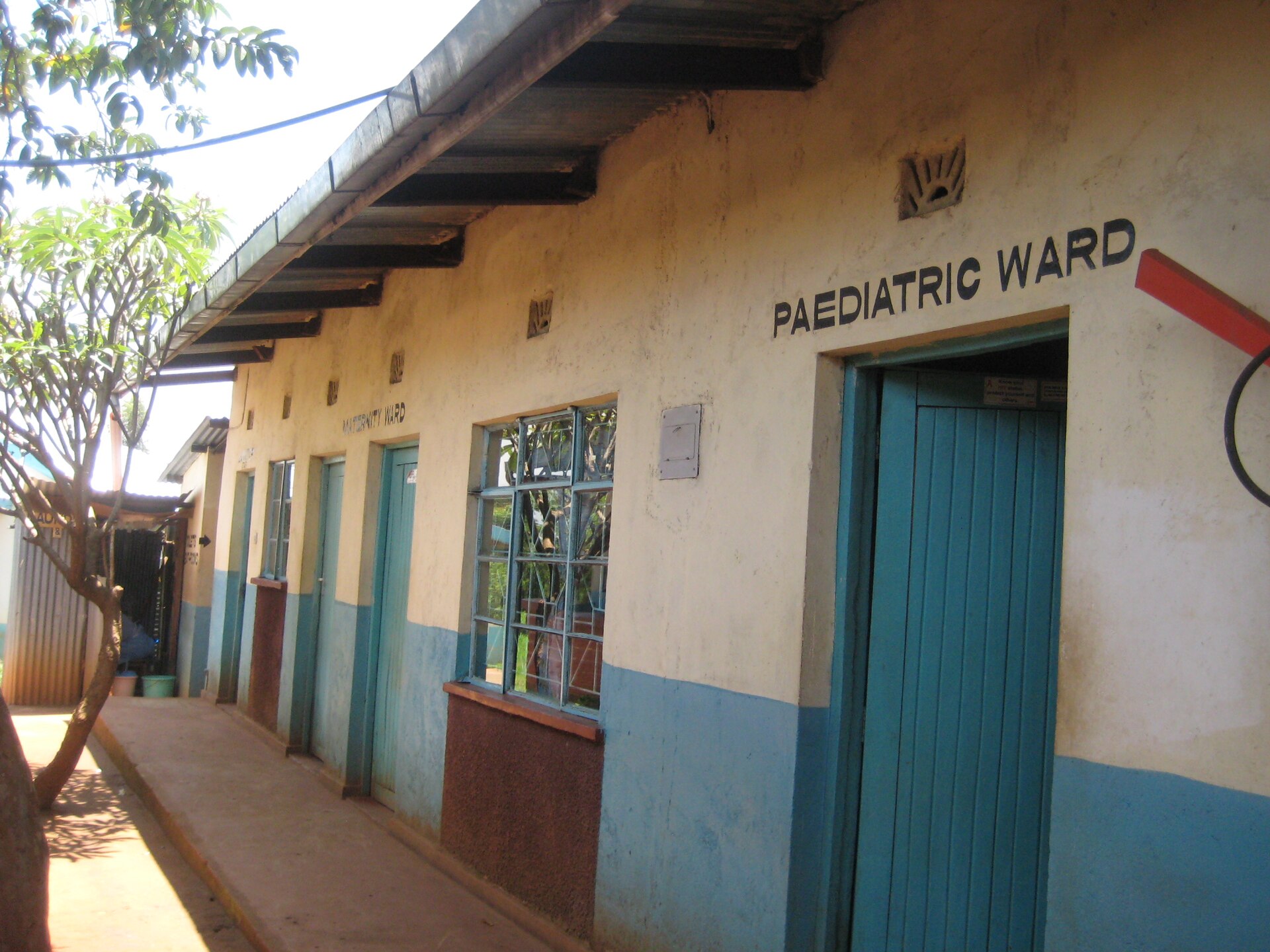
A ward block at a Kenyan health facility. File photo. Photo: Moving Mountains Trust / Wikimedia Commons, CC BY 2.0
Listen to this article5 min listenAI voice
Tap play to hear this story
You are listening to Kibra News Network.
Kenya’s social health insurance: what changed, how to register and what it covers.
Kenya replaced the National Hospital Insurance Fund with a new social health insurance framework, and the transition has been the single most confusing thing to happen to Kenyan healthcare administration in a generation. Households have found themselves registered but not covered, covered but turned away, or paying contributions they do not understand.
This is a plain-language guide to the structure. Because implementation has changed repeatedly, verify the current position with the Social Health Authority before you rely on any detail here.
The three funds
The system is built on three separate funds rather than one.
The Primary Healthcare Fund pays for services at primary level facilities, meaning dispensaries and health centres at levels 1 to 3. It is financed by government rather than by your contribution.
The Social Health Insurance Fund is the one your contributions go to. SHA states that the benefits under it, covering preventive, promotive, curative, rehabilitative and palliative services, are provided at level 4, 5 and 6 facilities on referral from primary care.
The Emergency, Chronic and Critical Illness Fund is intended to cover costs that exhaust the main fund, for conditions such as cancer, dialysis and prolonged critical care.
Who pays what
SHA sets contributions for salaried workers at 2.75 per cent of salary, deducted at source. Households without a regular salary make direct contributions, assessed on household means, payable in instalments. Government subsidises contributions for indigent and vulnerable persons and for people in lawful custody.
The means assessment is the part that has caused most difficulty, because it asks households in the informal economy to declare income they cannot document, and the outcome determines what they pay.
Registering
Registration is done through the official channels: the SHA portal, the USSD short code, or in person at a Huduma Centre, a chief's office or a participating health facility during a registration drive.
You need your national ID and the details of every dependant you are registering, including birth certificates for children. Foreign residents can use a Foreign Resident Certificate and refugees a Refugee ID. Register your dependants explicitly. A large share of the people turned away at facilities are dependants who were never added.
Before you need it, check three things
First, that your registration is active and your dependants are listed. Do this now, not at the hospital gate.
Second, that your contributions are up to date, because arrears suspend cover and there can be a waiting period after you clear them.
Third, that the facility you intend to use is empanelled and contracted by SHA. Not every hospital and not every clinic is, and the list changes.
At the facility
Take your ID. Accessing services requires biometric verification, so the member being treated needs to be the one verified. Ask, before treatment begins, whether the facility is empanelled, whether the specific service is covered, and what you will be asked to pay out of pocket. Get any expected out-of-pocket amount confirmed before admission rather than at discharge.
Keep every receipt and every discharge summary.
If you are refused cover you believe you are entitled to
Ask for the reason in writing. Escalate to the facility's administration, then to the Social Health Authority, which publishes a 24-hour line on 0800 720 601 and addresses at info@sha.go.ke and fraud@sha.go.ke, and then to the Commission on Administrative Justice.
If you are in Kibra and this has happened to you, KNN would like to hear about it. Write to news@kibranewsnetwork.co.ke.
This is general information, not medical or legal advice, and the scheme's rules have changed repeatedly since launch. Confirm current requirements with the Social Health Authority.
That was a Kibra News Network report, read by an A I voice.
Kenya replaced the National Hospital Insurance Fund with a new social health insurance framework, and the transition has been the single most confusing thing to happen to Kenyan healthcare administration in a generation. Households have found themselves registered but not covered, covered but turned away, or paying contributions they do not understand.
This is a plain-language guide to the structure. Because implementation has changed repeatedly, verify the current position with the Social Health Authority before you rely on any detail here.
The three funds
The system is built on three separate funds rather than one.
The Primary Healthcare Fund pays for services at primary level facilities, meaning dispensaries and health centres at levels 1 to 3. It is financed by government rather than by your contribution.
The Social Health Insurance Fund is the one your contributions go to. SHA states that the benefits under it, covering preventive, promotive, curative, rehabilitative and palliative services, are provided at level 4, 5 and 6 facilities on referral from primary care.
The Emergency, Chronic and Critical Illness Fund is intended to cover costs that exhaust the main fund, for conditions such as cancer, dialysis and prolonged critical care.
Who pays what
SHA sets contributions for salaried workers at 2.75 per cent of salary, deducted at source. Households without a regular salary make direct contributions, assessed on household means, payable in instalments. Government subsidises contributions for indigent and vulnerable persons and for people in lawful custody.
The means assessment is the part that has caused most difficulty, because it asks households in the informal economy to declare income they cannot document, and the outcome determines what they pay.
Registering
Registration is done through the official channels: the SHA portal, the USSD short code, or in person at a Huduma Centre, a chief’s office or a participating health facility during a registration drive.
You need your national ID and the details of every dependant you are registering, including birth certificates for children. Foreign residents can use a Foreign Resident Certificate and refugees a Refugee ID. Register your dependants explicitly. A large share of the people turned away at facilities are dependants who were never added.
Before you need it, check three things
First, that your registration is active and your dependants are listed. Do this now, not at the hospital gate.
Second, that your contributions are up to date, because arrears suspend cover and there can be a waiting period after you clear them.
Third, that the facility you intend to use is empanelled and contracted by SHA. Not every hospital and not every clinic is, and the list changes.
At the facility
Take your ID. Accessing services requires biometric verification, so the member being treated needs to be the one verified. Ask, before treatment begins, whether the facility is empanelled, whether the specific service is covered, and what you will be asked to pay out of pocket. Get any expected out-of-pocket amount confirmed before admission rather than at discharge.
Keep every receipt and every discharge summary.
If you are refused cover you believe you are entitled to
Ask for the reason in writing. Escalate to the facility’s administration, then to the Social Health Authority, which publishes a 24-hour line on 0800 720 601 and addresses at info@sha.go.ke and fraud@sha.go.ke, and then to the Commission on Administrative Justice.
If you are in Kibra and this has happened to you, KNN would like to hear about it. Write to news@kibranewsnetwork.co.ke.
This is general information, not medical or legal advice, and the scheme’s rules have changed repeatedly since launch. Confirm current requirements with the Social Health Authority.
KNN Newsroom is the staff byline for stories written, rewritten and edited at the Kibra News Network desk. Where a story credits an outside outlet, the original source is linked at the foot of the piece.