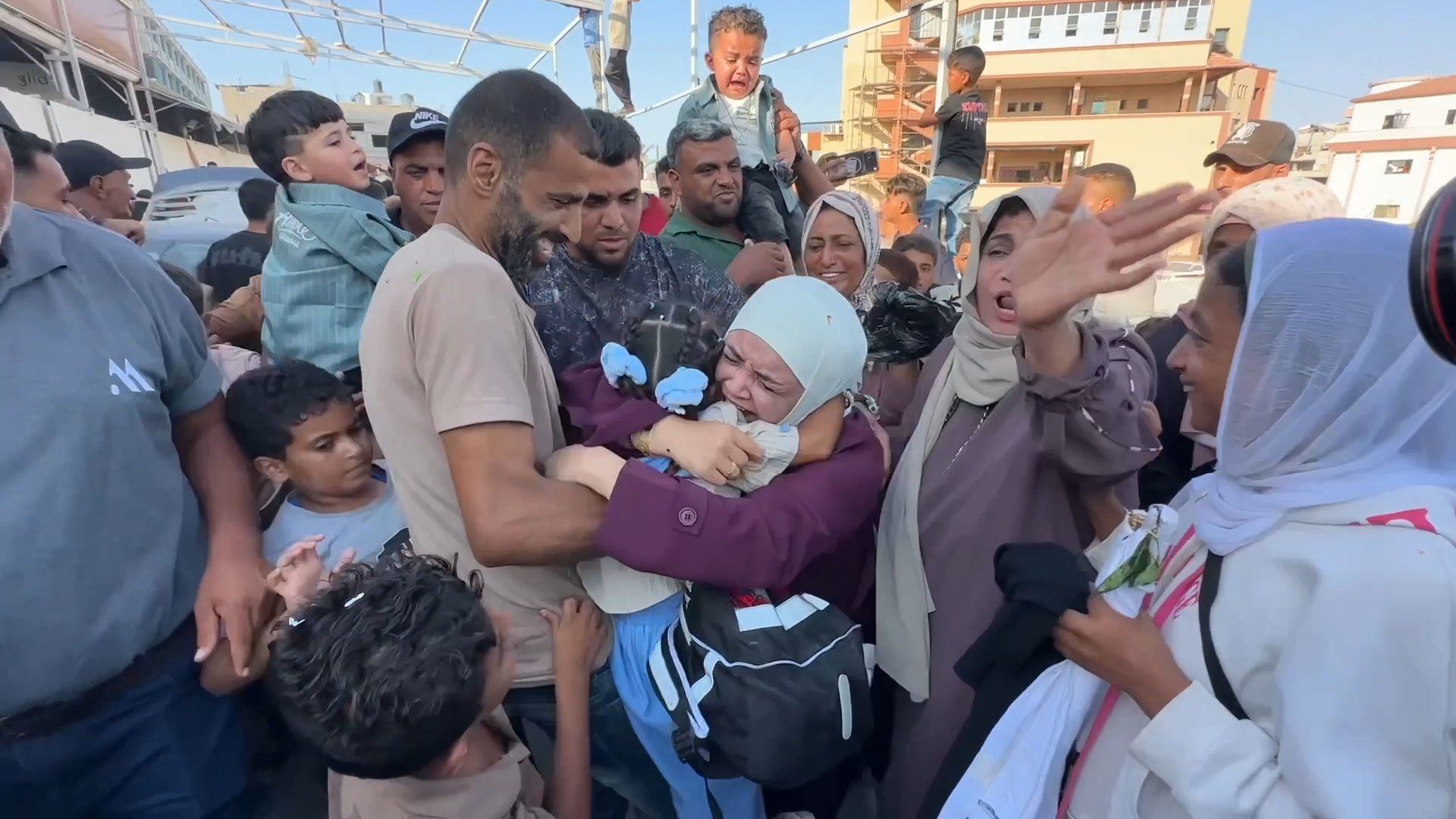
Palestinians gather in a crowd in Gaza. File photo. Photo: Al Jazeera
Listen to this article2 min listenAI voice
Tap play to hear this story
You are listening to Kibra News Network.
Return of goods to markets in Gaza doesn’t mean people can afford them.
Goods are returning to market shelves in Gaza, but displaced Palestinians say they still cannot afford food as prices stay high and income opportunities remain scarce, Al Jazeera reports.
Background
Supply returning to a market does not restore affordability. In a damaged economy, prices are set by the cost of getting goods in, by the number of traders able to operate, and above all by whether buyers have income. Where employment has collapsed and savings are gone, a full shelf and an empty pocket exist side by side, and humanitarian assessments treat purchasing power, rather than the presence of goods, as the measure of food security.
Why it matters here
The distinction is one Kibra households understand well. Food is almost always available in the settlement; the question is the price of the smallest quantity a household can buy today. That is why people here buy cooking fat by the spoon and maize flour by the small packet, paying a substantially higher unit price for the ability to buy at all. Availability and affordability are different problems, and only the second one shows up in a household budget.
What to watch next
Whether income and employment recover alongside supply, how prices move relative to any cash assistance, and what agencies report on purchasing power rather than availability.
This story was put together by K N N from material first published by Al Jazeera.
That was a Kibra News Network report, read by an A I voice.
Goods are returning to market shelves in Gaza, but displaced Palestinians say they still cannot afford food as prices stay high and income opportunities remain scarce, Al Jazeera reports.
Background
Supply returning to a market does not restore affordability. In a damaged economy, prices are set by the cost of getting goods in, by the number of traders able to operate, and above all by whether buyers have income. Where employment has collapsed and savings are gone, a full shelf and an empty pocket exist side by side, and humanitarian assessments treat purchasing power, rather than the presence of goods, as the measure of food security.
Why it matters here
The distinction is one Kibra households understand well. Food is almost always available in the settlement; the question is the price of the smallest quantity a household can buy today. That is why people here buy cooking fat by the spoon and maize flour by the small packet, paying a substantially higher unit price for the ability to buy at all. Availability and affordability are different problems, and only the second one shows up in a household budget.
What to watch next
Whether income and employment recover alongside supply, how prices move relative to any cash assistance, and what agencies report on purchasing power rather than availability.
KNN Newsroom is the staff byline for stories written, rewritten and edited at the Kibra News Network desk. Where a story credits an outside outlet, the original source is linked at the foot of the piece.