You are listening to Kibra News Network.
Opinion: Kibera does not need another documentary.
Opinion & Voices. The views here are the writer's own.
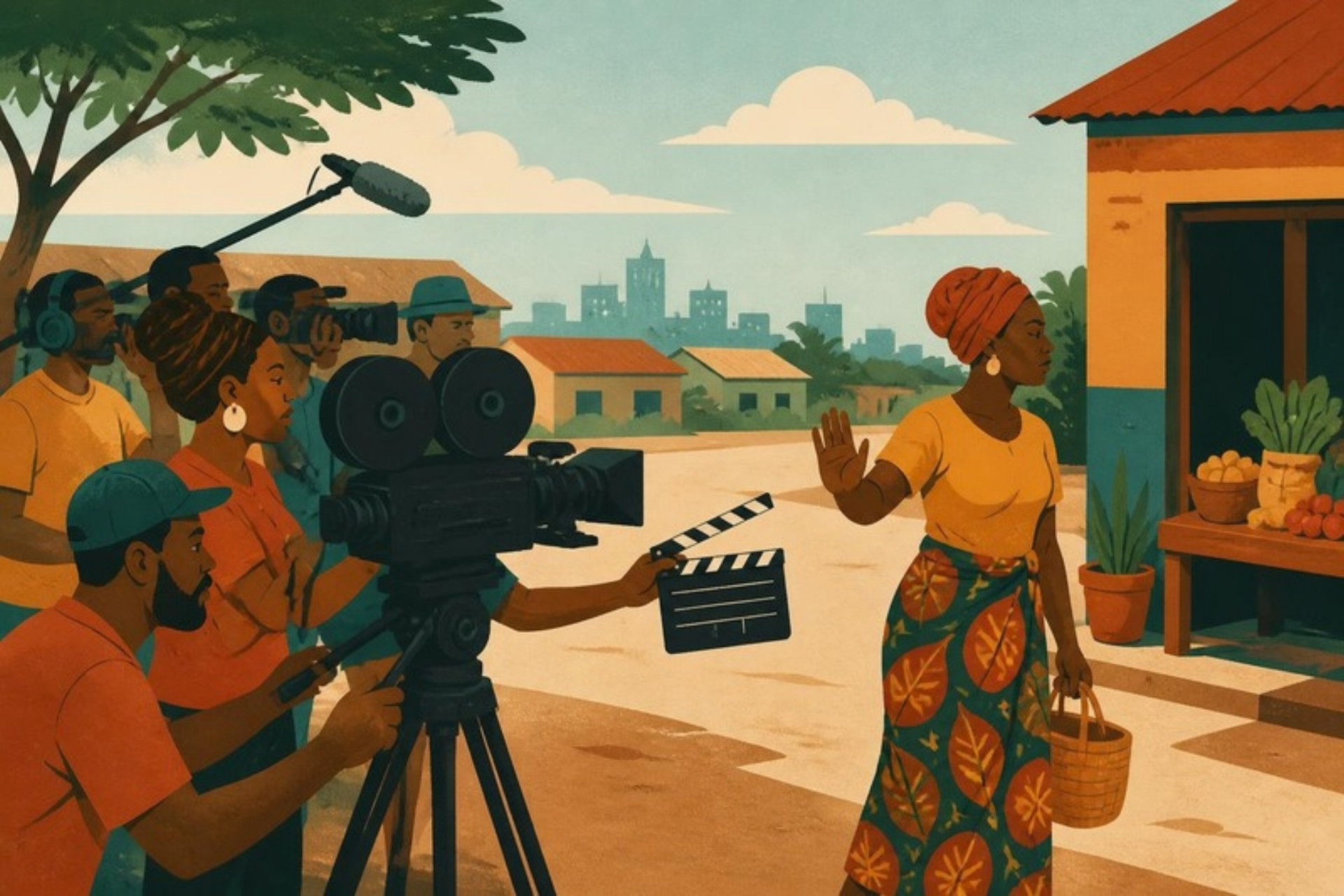
There is a film crew in Kibera most weeks. There has been for thirty years. In that time the settlement has appeared in feature films, in music videos, in charity appeals, in student projects and in the b-roll of a thousand news packages about African poverty. If exposure produced change, Kibera would be the best-served neighbourhood in Kenya.
It is not, and the reason is worth being blunt about. Almost all of that coverage is made for an audience that does not live here, in a format that requires Kibera to be a symbol rather than a place.
The symbol has a shape
You know it already. The aerial shot of rusted roofs. The narrow lane with running water. A child, framed low, walking towards camera. A statistic delivered in voiceover, usually wrong, usually about population. One resident who is allowed to speak, chosen because their circumstances are the hardest available, introduced by first name only.
Then the resolution: an organisation, usually foreign, usually the one that funded the film, doing something admirable.
Nothing in that sequence is a lie. Every element of it can be photographed on any given Tuesday. It is nonetheless a distortion, because it selects for one register and edits out everything that would complicate it. It edits out the tailor with twenty years of clients. The chama that has been running since 1998. The trader who reads the mitumba market better than a buyer at a department store. The school with results that embarrass richer catchments. The fact that this is, before it is anything else, a neighbourhood where about a quarter of a million people are getting on with their lives.
What it costs
The obvious cost is dignity, and it is real. People here are tired of being the illustration in somebody else's argument.
The less obvious cost is policy. If Kibera is understood as a humanitarian emergency, the response is charity. If it is understood as an unplanned but functioning urban district with a land tenure problem, an infrastructure deficit and a thriving informal economy, the response is planning, investment and regularisation. Those are different budgets, different ministries and different decades.
Fifty years of the first framing has produced water kiosks, clinics and schools, most of them good. It has not produced a title deed, a sewer network or a drainage system, because nobody funds infrastructure for a symbol.
What would be better
Not fewer journalists. More, and different ones.
Pay the fixer properly and credit them. The person who arranged your access has more editorial value than your producer and is usually paid a fraction of what a driver gets.
Name people fully, with their permission, with their job. First-name-only is a convention borrowed from vulnerability reporting and it is applied here reflexively, and it diminishes people.
Check the number. We will come back to the population figure another day, but do not repeat one million. It is not supported by any census.
Cover the boring things. Drainage. Waste tenders. Bursary allocation. The county water company's non-revenue water figure. Nobody wins an award for it and it is where the actual story is.
And come back. The single clearest marker of extractive coverage is that the crew is never seen again.
The obligation on us
This applies to Kenyan media too, including this one. It is easier to write the fire, the eviction and the protest than the committee meeting, and our own archive reflects that. A newsroom based in Kibra does not automatically escape the frame; it just has fewer excuses.
The test we would like to be judged on is simple. Over a year, does our coverage of this ward look like coverage of a place where people live, or like coverage of a problem? We will publish the tally.
That was a Kibra News Network report, read by an A I voice.
Opinion & Voices. The views here are the writer’s own.
There is a film crew in Kibera most weeks. There has been for thirty years. In that time the settlement has appeared in feature films, in music videos, in charity appeals, in student projects and in the b-roll of a thousand news packages about African poverty. If exposure produced change, Kibera would be the best-served neighbourhood in Kenya.
It is not, and the reason is worth being blunt about. Almost all of that coverage is made for an audience that does not live here, in a format that requires Kibera to be a symbol rather than a place.
The symbol has a shape
You know it already. The aerial shot of rusted roofs. The narrow lane with running water. A child, framed low, walking towards camera. A statistic delivered in voiceover, usually wrong, usually about population. One resident who is allowed to speak, chosen because their circumstances are the hardest available, introduced by first name only.
Then the resolution: an organisation, usually foreign, usually the one that funded the film, doing something admirable.
Nothing in that sequence is a lie. Every element of it can be photographed on any given Tuesday. It is nonetheless a distortion, because it selects for one register and edits out everything that would complicate it. It edits out the tailor with twenty years of clients. The chama that has been running since 1998. The trader who reads the mitumba market better than a buyer at a department store. The school with results that embarrass richer catchments. The fact that this is, before it is anything else, a neighbourhood where about a quarter of a million people are getting on with their lives.
What it costs
The obvious cost is dignity, and it is real. People here are tired of being the illustration in somebody else’s argument.
The less obvious cost is policy. If Kibera is understood as a humanitarian emergency, the response is charity. If it is understood as an unplanned but functioning urban district with a land tenure problem, an infrastructure deficit and a thriving informal economy, the response is planning, investment and regularisation. Those are different budgets, different ministries and different decades.
Fifty years of the first framing has produced water kiosks, clinics and schools, most of them good. It has not produced a title deed, a sewer network or a drainage system, because nobody funds infrastructure for a symbol.
What would be better
Not fewer journalists. More, and different ones.
Pay the fixer properly and credit them. The person who arranged your access has more editorial value than your producer and is usually paid a fraction of what a driver gets.
Name people fully, with their permission, with their job. First-name-only is a convention borrowed from vulnerability reporting and it is applied here reflexively, and it diminishes people.
Check the number. We will come back to the population figure another day, but do not repeat one million. It is not supported by any census.
Cover the boring things. Drainage. Waste tenders. Bursary allocation. The county water company’s non-revenue water figure. Nobody wins an award for it and it is where the actual story is.
And come back. The single clearest marker of extractive coverage is that the crew is never seen again.
The obligation on us
This applies to Kenyan media too, including this one. It is easier to write the fire, the eviction and the protest than the committee meeting, and our own archive reflects that. A newsroom based in Kibra does not automatically escape the frame; it just has fewer excuses.
The test we would like to be judged on is simple. Over a year, does our coverage of this ward look like coverage of a place where people live, or like coverage of a problem? We will publish the tally.
KNN Newsroom is the staff byline for stories written, rewritten and edited at the Kibra News Network desk. Where a story credits an outside outlet, the original source is linked at the foot of the piece.