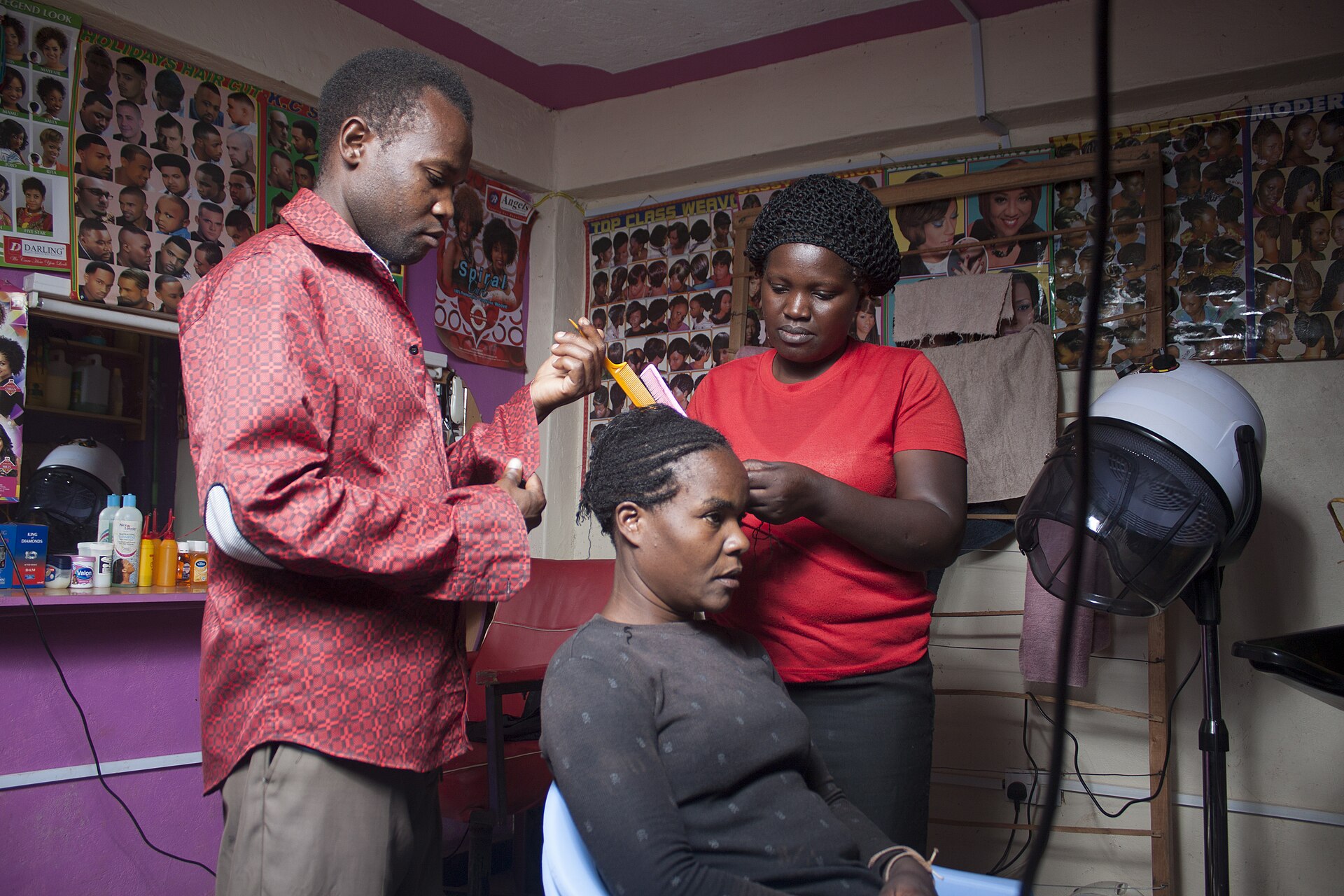
Photo: Isaiah Maghanga / Wikimedia Commons, CC BY-SA 4.0
Listen to this article5 min listenAI voice
Tap play to hear this story
You are listening to Kibra News Network.
Where young people in Kenya can actually get startup capital.
The advice given to young entrepreneurs in Kenya is usually to write a business plan. The problem is rarely the plan. It is that the capital available to a twenty-three-year-old in Kibra with no collateral, no payslip and no credit history is thin, and the sources that do exist are poorly explained.
Here is what actually exists, in rough order of how realistic it is.
Group credit
Chamas, table banking groups and SACCOs remain the largest real source of business capital for young people in informal settlements. A SACCO will typically lend a multiple of your savings against guarantors, which means the entry cost is time: you have to save consistently for months before you can borrow.
Realistic? Yes, and the most reliable route on this list. It requires patience rather than paperwork.
Government youth funds
National and county government have run several youth enterprise and affirmative-action funding schemes over the years, along with a reserved share of public procurement for enterprises owned by youth, women and persons with disabilities. Access generally requires registration, a group or company structure, and a bank account.
Realistic? Sometimes, and the procurement set-aside is the more valuable half. Winning even a small county supply contract does more for a young business than a grant, because it creates a trading record. The blocker is usually the requirement to finance delivery before you get paid.
Microfinance institutions
Licensed microfinance banks lend smaller amounts against group guarantees rather than collateral. Rates sit between SACCO rates and digital lender rates.
Realistic? Yes for a trading business with predictable turnover. Less so for anything that needs eighteen months before revenue.
Grants and competitions
Business plan competitions, incubators, accelerator programmes and donor-funded enterprise challenges run continually in Nairobi. The money is free and the odds are long.
Realistic? As a supplement, not a plan. The genuine value is often the training, the network and the credibility rather than the cash. Apply, but do not build the business around winning.
Bank lending
Commercial banks have youth and SME propositions, and most of them require security, a trading history or a guarantor. A bank account with twelve months of visible turnover changes the conversation more than any pitch deck.
Realistic? Only after you have been trading formally for a year or more. Which is an argument for registering earlier than you think you need to.
The ones to be careful with
Unlicensed digital lenders. Digital credit providers must be licensed by the Central Bank of Kenya under section 59 of the CBK Act, and the Bank publishes the list of those that are. Check it. Unlicensed apps have been responsible for the worst of the debt-shaming and data-harvesting behaviour in this market.
Anyone charging a fee to access a fund. Government funds do not require a facilitation payment. Anyone who says otherwise is running a scam, and this particular scam is common.
Shylocks. Informal lenders charging weekly rates against a business asset. People lose the asset.
The unglamorous truth
Most successful small businesses in Kibra were not started with a loan. They were started with savings, a small amount of family money and stock bought on credit from a supplier who knew the family. Supplier credit is the most underrated form of finance in this economy and it costs nothing but reputation.
General information only. KNN does not endorse any lender or fund and this is not financial advice. Verify any programme directly with the institution before paying anything or sharing documents.
That was a Kibra News Network report, read by an A I voice.
The advice given to young entrepreneurs in Kenya is usually to write a business plan. The problem is rarely the plan. It is that the capital available to a twenty-three-year-old in Kibra with no collateral, no payslip and no credit history is thin, and the sources that do exist are poorly explained.
Here is what actually exists, in rough order of how realistic it is.
Group credit
Chamas, table banking groups and SACCOs remain the largest real source of business capital for young people in informal settlements. A SACCO will typically lend a multiple of your savings against guarantors, which means the entry cost is time: you have to save consistently for months before you can borrow.
Realistic? Yes, and the most reliable route on this list. It requires patience rather than paperwork.
Government youth funds
National and county government have run several youth enterprise and affirmative-action funding schemes over the years, along with a reserved share of public procurement for enterprises owned by youth, women and persons with disabilities. Access generally requires registration, a group or company structure, and a bank account.
Realistic? Sometimes, and the procurement set-aside is the more valuable half. Winning even a small county supply contract does more for a young business than a grant, because it creates a trading record. The blocker is usually the requirement to finance delivery before you get paid.
Microfinance institutions
Licensed microfinance banks lend smaller amounts against group guarantees rather than collateral. Rates sit between SACCO rates and digital lender rates.
Realistic? Yes for a trading business with predictable turnover. Less so for anything that needs eighteen months before revenue.
Grants and competitions
Business plan competitions, incubators, accelerator programmes and donor-funded enterprise challenges run continually in Nairobi. The money is free and the odds are long.
Realistic? As a supplement, not a plan. The genuine value is often the training, the network and the credibility rather than the cash. Apply, but do not build the business around winning.
Bank lending
Commercial banks have youth and SME propositions, and most of them require security, a trading history or a guarantor. A bank account with twelve months of visible turnover changes the conversation more than any pitch deck.
Realistic? Only after you have been trading formally for a year or more. Which is an argument for registering earlier than you think you need to.
The ones to be careful with
Unlicensed digital lenders. Digital credit providers must be licensed by the Central Bank of Kenya under section 59 of the CBK Act, and the Bank publishes the list of those that are. Check it. Unlicensed apps have been responsible for the worst of the debt-shaming and data-harvesting behaviour in this market.
Anyone charging a fee to access a fund. Government funds do not require a facilitation payment. Anyone who says otherwise is running a scam, and this particular scam is common.
Shylocks. Informal lenders charging weekly rates against a business asset. People lose the asset.
The unglamorous truth
Most successful small businesses in Kibra were not started with a loan. They were started with savings, a small amount of family money and stock bought on credit from a supplier who knew the family. Supplier credit is the most underrated form of finance in this economy and it costs nothing but reputation.
General information only. KNN does not endorse any lender or fund and this is not financial advice. Verify any programme directly with the institution before paying anything or sharing documents.
KNN Newsroom is the staff byline for stories written, rewritten and edited at the Kibra News Network desk. Where a story credits an outside outlet, the original source is linked at the foot of the piece.