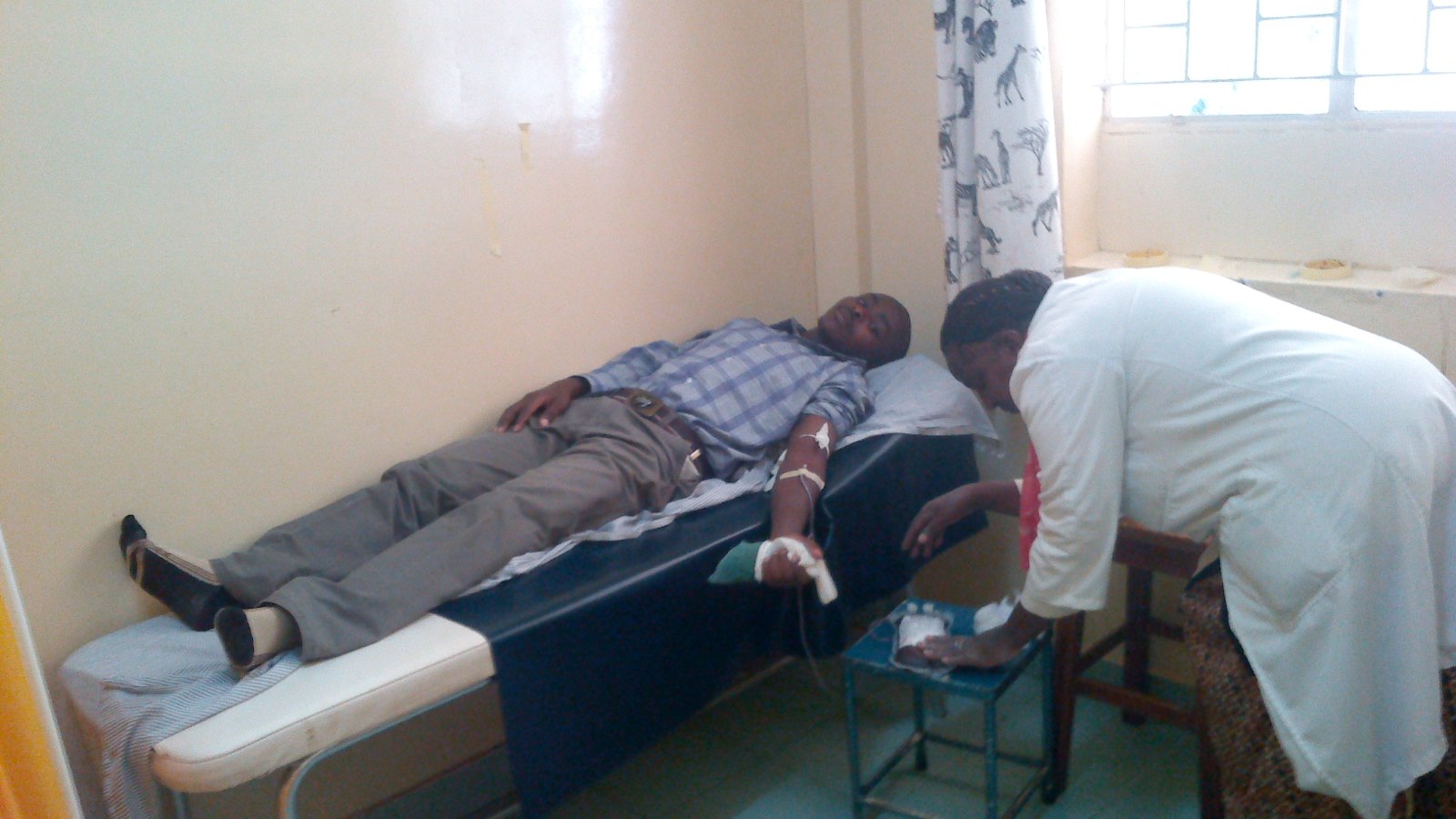
A health worker attends to a patient at a Kenyan clinic. KNN’s directory lists the public, faith-based and private facilities serving Kibra. Photo: DANKABSM/Wikimedia Commons (CC BY-SA 4.0)
Listen to this article4 min listenAI voice
Tap play to hear this story
You are listening to Kibra News Network.
Where to get healthcare in Kibra: a working directory.
Kibra is unusually well served with clinics by the standards of an informal settlement, and unusually badly served with the levels of care above them. Knowing which facility does what saves time, money and occasionally a great deal more.
This is a working guide to the tiers rather than an exhaustive list. Send us corrections and additions and we will maintain it.
Level 2: dispensaries and health posts
What they do: outpatient consultation, common illnesses, wound dressing, immunisation, antenatal checks, family planning, testing for HIV, malaria and TB, and referral upwards.
What they cannot do: admit you, operate, or handle a serious emergency.
Kibra has a dense network of these, run variously by the county, by faith organisations and by NGOs. They are the correct first stop for most things.
Level 3: health centres
What they do: everything a dispensary does, plus normal deliveries, short observation stays, minor procedures and a wider laboratory.
For maternity, a health centre is the appropriate place for an uncomplicated delivery, and delivering at a facility rather than at home is the single most important safety decision in a pregnancy.
Level 4: sub-county hospitals
What they do: inpatient admission, surgery, comprehensive maternity including caesarean section, and specialist outpatient clinics.
Kibra's Level 4 provision and the facilities in neighbouring sub-counties, including Mbagathi, are where admissions and operations happen. This is the level to go to directly for anything that plainly needs admission.
Level 5 and 6: referral hospitals
Kenyatta National Hospital is the national referral hospital and the destination for specialist and complex care. Go there with a referral letter unless it is an emergency; arriving without one means a long day.
NGO and mission clinics
Several long-established organisations run clinics in and around the settlement, including facilities associated with Carolina for Kibera, Shining Hope for Communities and various mission hospitals nearby. Services and fees vary and some run specific programmes for HIV care, maternal health or child nutrition.
Pharmacies
A registered pharmacy is a legitimate first stop for minor complaints and the pharmacist is a qualified professional. Two cautions. Check that the premises is registered with the Pharmacy and Poisons Board. And do not buy antibiotics without a prescription, even where someone is willing to sell them; the resistance problem this creates is already serious in Nairobi.
When to skip the clinic and go straight to a hospital
Chest pain, difficulty breathing, a seizure, sudden weakness or drooping on one side of the face, uncontrolled bleeding, a serious burn, a head injury with loss of consciousness, a child who is limp, unresponsive or convulsing, and any pregnancy with bleeding, severe pain or reduced fetal movement.
For these, do not wait for a referral. Go to the nearest facility that can admit and operate.
Mental health
Provision is thin, and community organisations carry much of the load. Kibra Youth Network runs counselling and peer support circles, and Kenya has a national mental health helpline; ask at any health facility for the current number. Peer support is valuable and is not a substitute for clinical care in a crisis.
Help us keep this accurate
If you work at or use a facility in Kibra, send us the name, village, opening hours, services and costs. Email news@kibranewsnetwork.co.ke with the subject line Health Directory.
General information only, not medical advice. In an emergency, go to the nearest facility.
That was a Kibra News Network report, read by an A I voice.
Kibra is unusually well served with clinics by the standards of an informal settlement, and unusually badly served with the levels of care above them. Knowing which facility does what saves time, money and occasionally a great deal more.
This is a working guide to the tiers rather than an exhaustive list. Send us corrections and additions and we will maintain it.
Level 2: dispensaries and health posts
What they do: outpatient consultation, common illnesses, wound dressing, immunisation, antenatal checks, family planning, testing for HIV, malaria and TB, and referral upwards.
What they cannot do: admit you, operate, or handle a serious emergency.
Kibra has a dense network of these, run variously by the county, by faith organisations and by NGOs. They are the correct first stop for most things.
Level 3: health centres
What they do: everything a dispensary does, plus normal deliveries, short observation stays, minor procedures and a wider laboratory.
For maternity, a health centre is the appropriate place for an uncomplicated delivery, and delivering at a facility rather than at home is the single most important safety decision in a pregnancy.
Level 4: sub-county hospitals
What they do: inpatient admission, surgery, comprehensive maternity including caesarean section, and specialist outpatient clinics.
Kibra’s Level 4 provision and the facilities in neighbouring sub-counties, including Mbagathi, are where admissions and operations happen. This is the level to go to directly for anything that plainly needs admission.
Level 5 and 6: referral hospitals
Kenyatta National Hospital is the national referral hospital and the destination for specialist and complex care. Go there with a referral letter unless it is an emergency; arriving without one means a long day.
NGO and mission clinics
Several long-established organisations run clinics in and around the settlement, including facilities associated with Carolina for Kibera, Shining Hope for Communities and various mission hospitals nearby. Services and fees vary and some run specific programmes for HIV care, maternal health or child nutrition.
Pharmacies
A registered pharmacy is a legitimate first stop for minor complaints and the pharmacist is a qualified professional. Two cautions. Check that the premises is registered with the Pharmacy and Poisons Board. And do not buy antibiotics without a prescription, even where someone is willing to sell them; the resistance problem this creates is already serious in Nairobi.
When to skip the clinic and go straight to a hospital
Chest pain, difficulty breathing, a seizure, sudden weakness or drooping on one side of the face, uncontrolled bleeding, a serious burn, a head injury with loss of consciousness, a child who is limp, unresponsive or convulsing, and any pregnancy with bleeding, severe pain or reduced fetal movement.
For these, do not wait for a referral. Go to the nearest facility that can admit and operate.
Mental health
Provision is thin, and community organisations carry much of the load. Kibra Youth Network runs counselling and peer support circles, and Kenya has a national mental health helpline; ask at any health facility for the current number. Peer support is valuable and is not a substitute for clinical care in a crisis.
Help us keep this accurate
If you work at or use a facility in Kibra, send us the name, village, opening hours, services and costs. Email news@kibranewsnetwork.co.ke with the subject line Health Directory.
General information only, not medical advice. In an emergency, go to the nearest facility.
KNN Newsroom is the staff byline for stories written, rewritten and edited at the Kibra News Network desk. Where a story credits an outside outlet, the original source is linked at the foot of the piece.