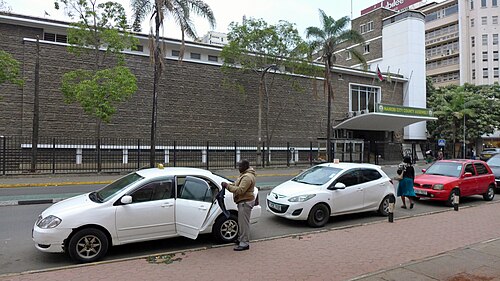
The Nairobi City County Assembly building. File photo, illustrative. Photo: Bahnfrend / Wikimedia Commons (CC BY-SA 4.0)
Listen to this article2 min listenAI voice
Tap play to hear this story
You are listening to Kibra News Network.
Eastleigh North MCA Dabar re-elected Nairobi county WDF committee chair.
Background
Ward Development Fund committees are among the least covered and most directly consequential bodies in Kenyan devolution. They oversee the allocation of ward-level funds to small capital projects: footbridges, drainage, classrooms, floodlights, cabros, water points and similar works. The sums per ward are modest against a county budget, but they are the layer of public spending that residents encounter most directly, and the chair of the oversight committee has real influence over sequencing and scrutiny.
In Nairobi, the fund has repeatedly been the subject of audit queries and County Assembly disputes over disbursement delays, project identification and the level of public participation involved in choosing works. Committee leadership therefore tends to be contested along the same lines as other Assembly positions, reflecting party blocs and ward coalitions rather than administrative seniority alone.
Why it matters here
Kibra's wards depend heavily on exactly this category of spending. Drainage, lighting, sanitation blocks and footbridges are ward-fund projects, and they are the works most often cited by residents when asked what has or has not been delivered. Who chairs the committee overseeing that money affects how quickly projects are approved and how rigorously they are checked once complete.
What to watch next
The measures worth following are whether ward fund disbursements are released on schedule, whether project lists are published ward by ward, and whether the committee follows up on the Auditor-General's previous queries. Public participation forums are the point at which residents can raise project priorities directly.
This story was put together by K N N from material first published by the Star.
That was a Kibra News Network report, read by an A I voice.
Eastleigh North MCA Dabar re-elected Nairobi county WDF committee chair the-star.co.ke
Background
Ward Development Fund committees are among the least covered and most directly consequential bodies in Kenyan devolution. They oversee the allocation of ward-level funds to small capital projects: footbridges, drainage, classrooms, floodlights, cabros, water points and similar works. The sums per ward are modest against a county budget, but they are the layer of public spending that residents encounter most directly, and the chair of the oversight committee has real influence over sequencing and scrutiny.
In Nairobi, the fund has repeatedly been the subject of audit queries and County Assembly disputes over disbursement delays, project identification and the level of public participation involved in choosing works. Committee leadership therefore tends to be contested along the same lines as other Assembly positions, reflecting party blocs and ward coalitions rather than administrative seniority alone.
Why it matters here
Kibra’s wards depend heavily on exactly this category of spending. Drainage, lighting, sanitation blocks and footbridges are ward-fund projects, and they are the works most often cited by residents when asked what has or has not been delivered. Who chairs the committee overseeing that money affects how quickly projects are approved and how rigorously they are checked once complete.
What to watch next
The measures worth following are whether ward fund disbursements are released on schedule, whether project lists are published ward by ward, and whether the committee follows up on the Auditor-General’s previous queries. Public participation forums are the point at which residents can raise project priorities directly.
KNN Newsroom is the staff byline for stories written, rewritten and edited at the Kibra News Network desk. Where a story credits an outside outlet, the original source is linked at the foot of the piece.