You are listening to Kibra News Network.
Kibra is Nairobi’s least populous sub-county, not a city of a million.
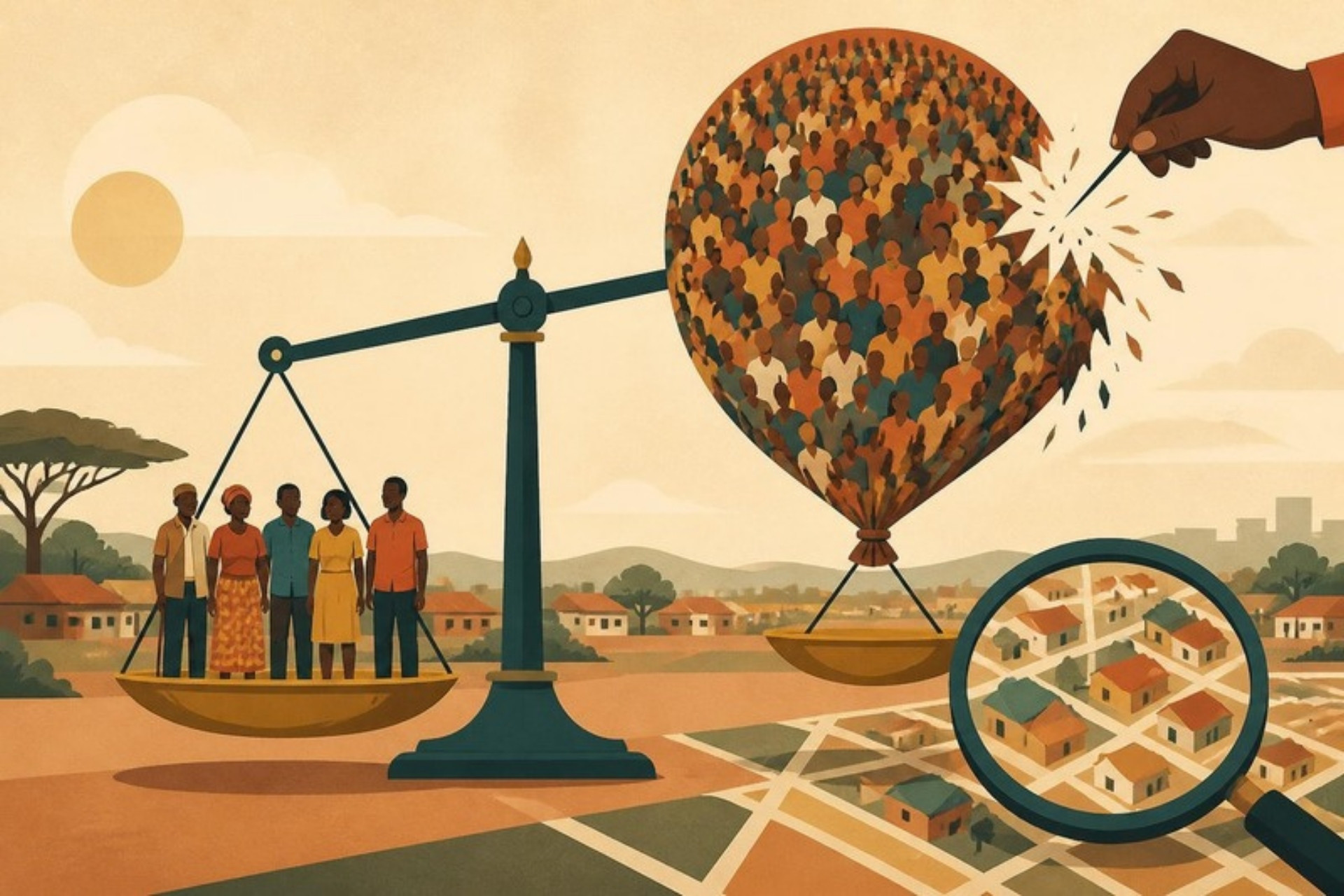
Kibera is routinely described as Africa's largest slum, home to a million people. The Kenya National Bureau of Statistics does not support that.
The 2019 census counted 185,777 people in Kibra sub-county – 94,199 male, 91,569 female and 9 intersex. That is the smallest of Nairobi's eleven sub-counties. Makadara has 189,536. Langata has 197,489. Embakasi has 988,808.
The figure is also generous as a measure of the settlement itself. Kibra constituency includes Woodley and Kenyatta Golf Course, which is not informal housing. The number of people living in Kibera's informal villages is lower than 185,777.
One recent spatial analysis put the fifteen informal villages at a combined 118,834 people.
This is not new. After the 2009 census, which counted 170,070 across Kibera's eight locations, Kenya's then census director Anthony Kilele said publicly that informal settlement populations had been exaggerated for a long time.
The inflated numbers have consequences. They shape how donors allocate money, how journalists frame the place, and how residents are described to the world.
Registered voters give another anchor. The electoral commission gazetted 118,658 voters in Kibra in 2019, spread across five wards: Sarang'ombe 30,754, Woodley/Kenyatta Golf Course 28,066, Makina 25,695, Laini Saba 17,455 and Lindi 16,688.
The next census is due in 2029. Until then, 185,777 is the number, and it is worth using.
This story was put together by K N N from material first published by The Standard.
That was a Kibra News Network report, read by an A I voice.
Kibera is routinely described as Africa’s largest slum, home to a million people. The Kenya National Bureau of Statistics does not support that.
The 2019 census counted 185,777 people in Kibra sub-county — 94,199 male, 91,569 female and 9 intersex. That is the smallest of Nairobi’s eleven sub-counties. Makadara has 189,536. Langata has 197,489. Embakasi has 988,808.
The figure is also generous as a measure of the settlement itself. Kibra constituency includes Woodley and Kenyatta Golf Course, which is not informal housing. The number of people living in Kibera’s informal villages is lower than 185,777.
One recent spatial analysis put the fifteen informal villages at a combined 118,834 people.
This is not new. After the 2009 census, which counted 170,070 across Kibera’s eight locations, Kenya’s then census director Anthony Kilele said publicly that informal settlement populations had been exaggerated for a long time.
The inflated numbers have consequences. They shape how donors allocate money, how journalists frame the place, and how residents are described to the world.
Registered voters give another anchor. The electoral commission gazetted 118,658 voters in Kibra in 2019, spread across five wards: Sarang’ombe 30,754, Woodley/Kenyatta Golf Course 28,066, Makina 25,695, Laini Saba 17,455 and Lindi 16,688.
The next census is due in 2029. Until then, 185,777 is the number, and it is worth using.
KNN Newsroom is the staff byline for stories written, rewritten and edited at the Kibra News Network desk. Where a story credits an outside outlet, the original source is linked at the foot of the piece.