You are listening to Kibra News Network.
El Niño: Nairobi tells families along the rivers to move out, and warns schools could close. What it means for Kibra.
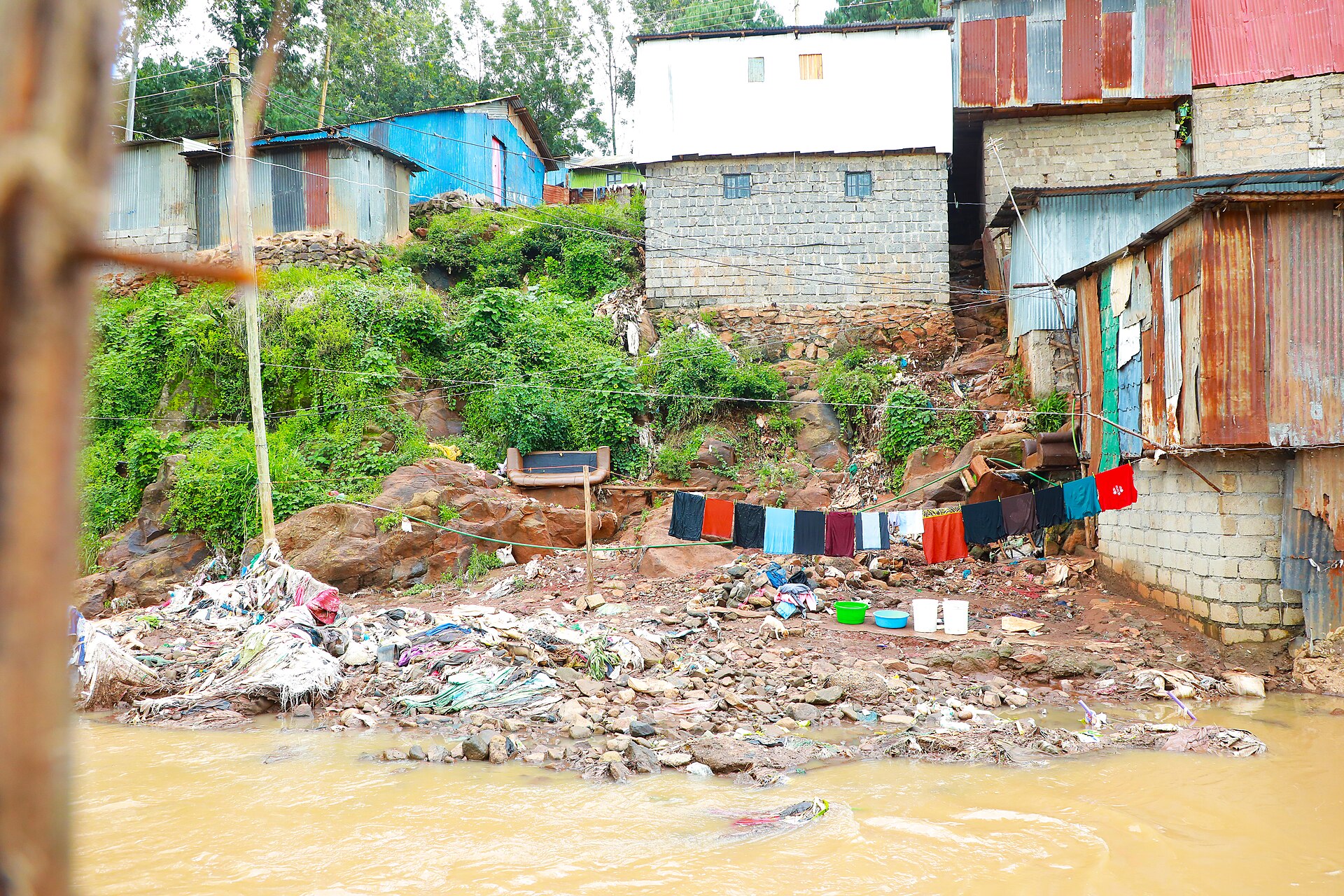
Nairobi Governor Johnson Sakaja has ordered people living along the Nairobi, Ngong and Mathare rivers to move out before the El Niño rains, which the county expects in about two weeks.
The order was given on Monday, 28 September, as the governor put national and county agencies under what he called "one team, one command, one control and one direction" for the rains. NTV reports that Kibra, Mukuru and Embakasi are on the list of the areas most at risk.
The numbers
227 flood hotspots have been mapped across Nairobi's 17 sub-counties.
About 100,000 people are expected to be affected, according to NTV.
The county says it has a Sh2.4 billion flood plan, with Sh2 billion for drainage and flood control on 19 roads, People Daily reports.
In the 2024 floods, 62 primary schools in Nairobi were under water and about 15,000 learners were affected.
Schools could close
"At some point we might need to close schools," Sakaja said, according to People Daily. No schools have been named and no dates given. It depends on how heavy the rains are.
Structures on drainage lines are coming down
County teams are also pulling down structures built on drainage corridors. The Star reported on Friday, 26 September, that work was under way on Naivasha Road in Kawangware, at Mlango Soko, Imara Daima, Kwa Njenga and along Governor's Road in Embakasi. The governor said structures built on drainage corridors cannot be allowed to put people at risk.
The agencies now working together include the national government administration, the police, KURA, KeNHA, Kenya Red Cross and Green Nairobi. Sakaja had earlier given engineers 14 days to finish drainage works.
Health warning: water and food
On the same Monday, the State Department for Public Health warned of four risks that come with the rains: cholera, typhoid, aflatoxin in damp maize and beans, and food sold in flooded markets. Its advice:
Stock WaterGuard or chlorine tablets. Clean and cover water tanks and drums. Boil drinking water.
Keep maize, beans and groundnuts fully dry, in airtight containers, off the floor.
Keep soap or sanitiser at home, and cover leftovers.
Traders: raise food off the ground, keep it covered and clear the drains around your stall.
What it means for you
If you live next to the Ngong River, which runs along the southern edge of Kibera past Nairobi Dam, you are in the area the county wants cleared. The reports KNN reviewed do not say where families who move will be housed, or what help they will get. KNN will follow this up.
Put your ID, title deeds, school documents and M-Pesa records in a sealed plastic bag now.
Agree with your family on where you would go if water comes in, and save the numbers. Our El Niño checklist for Kibra homes has the full list.
If your child's school closes, or if you are told to move, tell KNN on WhatsApp +254 721 319 377.
Sources: Capital FM via AllAfrica, NTV Kenya, People Daily, The Star,.
That was a Kibra News Network report, read by an A I voice.
Nairobi Governor Johnson Sakaja has ordered people living along the Nairobi, Ngong and Mathare rivers to move out before the El Niño rains, which the county expects in about two weeks.
The order was given on Monday, 28 September, as the governor put national and county agencies under what he called “one team, one command, one control and one direction” for the rains. NTV reports that Kibra, Mukuru and Embakasi are on the list of the areas most at risk.
The numbers
227 flood hotspots have been mapped across Nairobi’s 17 sub-counties.
About 100,000 people are expected to be affected, according to NTV.
The county says it has a Sh2.4 billion flood plan, with Sh2 billion for drainage and flood control on 19 roads, People Daily reports.
In the 2024 floods, 62 primary schools in Nairobi were under water and about 15,000 learners were affected.
Schools could close
“At some point we might need to close schools,” Sakaja said, according to People Daily. No schools have been named and no dates given. It depends on how heavy the rains are.
Structures on drainage lines are coming down
County teams are also pulling down structures built on drainage corridors. The Star reported on Friday, 26 September, that work was under way on Naivasha Road in Kawangware, at Mlango Soko, Imara Daima, Kwa Njenga and along Governor’s Road in Embakasi. The governor said structures built on drainage corridors cannot be allowed to put people at risk.
The agencies now working together include the national government administration, the police, KURA, KeNHA, Kenya Red Cross and Green Nairobi. Sakaja had earlier given engineers 14 days to finish drainage works.
Health warning: water and food
On the same Monday, the State Department for Public Health warned of four risks that come with the rains: cholera, typhoid, aflatoxin in damp maize and beans, and food sold in flooded markets. Its advice:
Stock WaterGuard or chlorine tablets. Clean and cover water tanks and drums. Boil drinking water.
Keep maize, beans and groundnuts fully dry, in airtight containers, off the floor.
Keep soap or sanitiser at home, and cover leftovers.
Traders: raise food off the ground, keep it covered and clear the drains around your stall.
What it means for you
If you live next to the Ngong River, which runs along the southern edge of Kibera past Nairobi Dam, you are in the area the county wants cleared. The reports KNN reviewed do not say where families who move will be housed, or what help they will get. KNN will follow this up.
Put your ID, title deeds, school documents and M-Pesa records in a sealed plastic bag now.
Agree with your family on where you would go if water comes in, and save the numbers. Our El Niño checklist for Kibra homes has the full list.
If your child’s school closes, or if you are told to move, tell KNN on WhatsApp +254 721 319 377.
KNN Newsroom is the staff byline for stories written, rewritten and edited at the Kibra News Network desk. Where a story credits an outside outlet, the original source is linked at the foot of the piece.