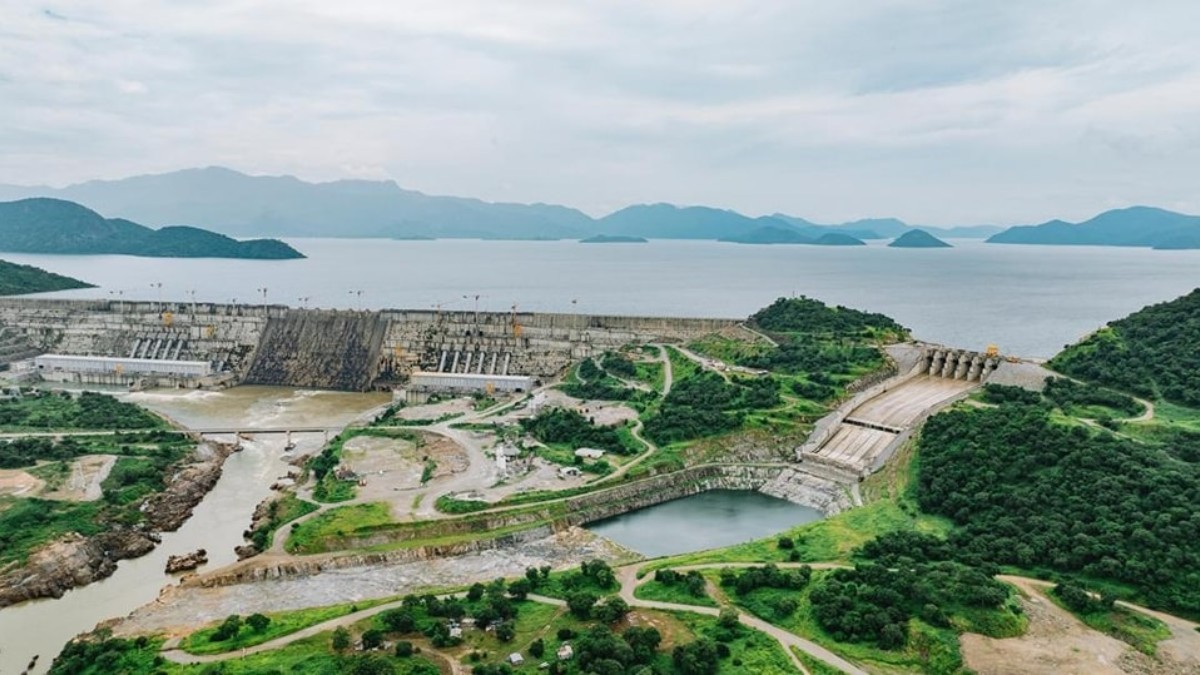
Photo: Prime Minister Office Ethiopia / Wikimedia Commons, Public domain
Listen to this article2 min listenAI voice
Tap play to hear this story
You are listening to Kibra News Network.
Ethiopia’s Grand Renaissance Dam comes fully online, stirring hope and Nile tensions.
Ethiopia's Grand Ethiopian Renaissance Dam (GERD) – Africa's largest hydroelectric project – is now fully operational, a milestone that fuels the continent's energy ambitions even as it deepens tensions along the Nile. Built on the Blue Nile at a cost of around $5 billion, the dam has a capacity of roughly 5,150 megawatts and stands as a powerful symbol of Ethiopian national pride.
The regional dimension is significant for Kenya, which has signed a power-purchase agreement to buy 200 megawatts initially, rising toward 400 megawatts over 25 years – part of a growing East African push toward shared, cleaner energy. Kenya, Djibouti, South Sudan and Somalia attended the dam's inauguration, framing it as a regional milestone.
Downstream, however, Egypt and Sudan see an existential risk. Egypt's foreign minister has called the dam a threat to the water security of some 150 million people, and years of negotiations have failed to produce a binding agreement on how the reservoir is filled and operated. The GERD thus captures a defining African tension: the drive for development and power set against shared rivers that no single nation controls.
This story was put together by K N N from material first published by Mongabay & ESI Africa.
That was a Kibra News Network report, read by an A I voice.
Ethiopia’s Grand Ethiopian Renaissance Dam (GERD) — Africa’s largest hydroelectric project — is now fully operational, a milestone that fuels the continent’s energy ambitions even as it deepens tensions along the Nile. Built on the Blue Nile at a cost of around $5 billion, the dam has a capacity of roughly 5,150 megawatts and stands as a powerful symbol of Ethiopian national pride.
The regional dimension is significant for Kenya, which has signed a power-purchase agreement to buy 200 megawatts initially, rising toward 400 megawatts over 25 years — part of a growing East African push toward shared, cleaner energy. Kenya, Djibouti, South Sudan and Somalia attended the dam’s inauguration, framing it as a regional milestone.
Downstream, however, Egypt and Sudan see an existential risk. Egypt’s foreign minister has called the dam a threat to the water security of some 150 million people, and years of negotiations have failed to produce a binding agreement on how the reservoir is filled and operated. The GERD thus captures a defining African tension: the drive for development and power set against shared rivers that no single nation controls.
KNN Newsroom is the staff byline for stories written, rewritten and edited at the Kibra News Network desk. Where a story credits an outside outlet, the original source is linked at the foot of the piece.