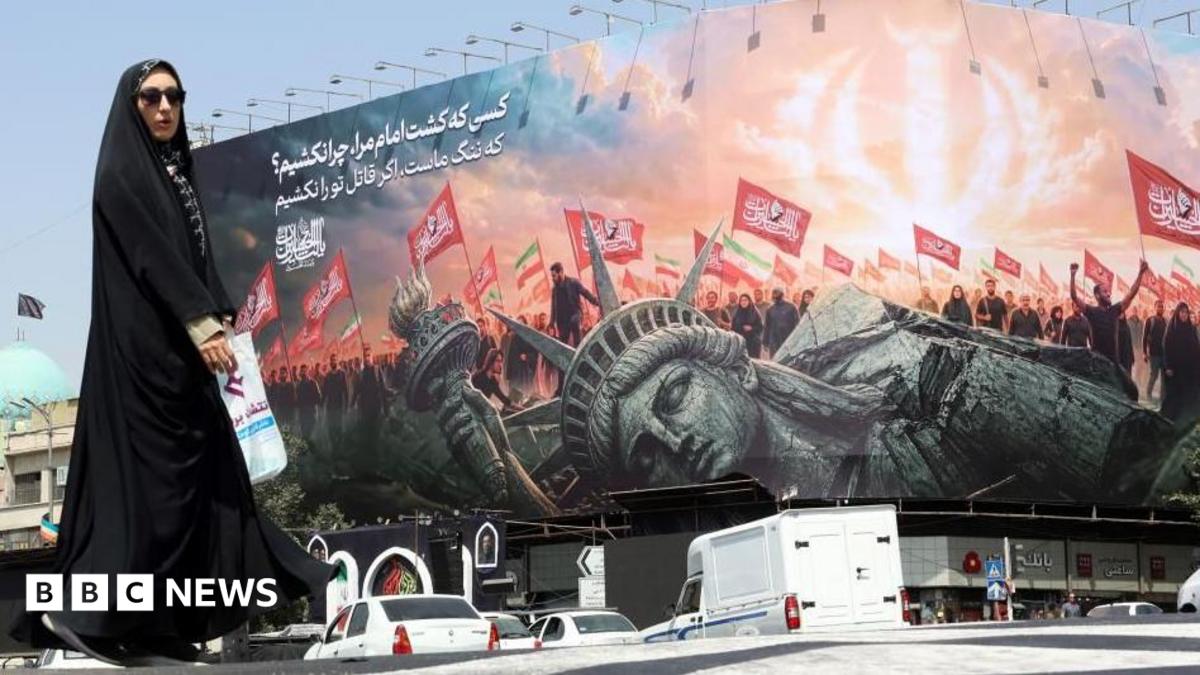
A veiled Iranian woman walks past an anti-US billboard at Enghelab Square in central Tehran. File photo. Photo: BBC News
Listen to this article2 min listenAI voice
Tap play to hear this story
You are listening to Kibra News Network.
Iran issues new demands as Pezeshkian seeks deal.
Senior Iranian security official sets broader conditions for reopening Hormuz.
Background
The Strait of Hormuz is the narrow sea passage between Iran and Oman through which a large share of the world's crude oil and liquefied natural gas is shipped. Because there is no practical alternative route for most Gulf producers, any restriction there is felt globally within days through freight rates, war-risk insurance premiums and the crude price. Negotiations in which access to the strait is tied to broader conditions are therefore never only about shipping; they are about sanctions, banking access and the wider terms of a settlement.
Why it matters here
Kenya sits at the receiving end of that chain. Nearly all of the country's petroleum products are imported, and the landed cost feeds directly into the monthly price cap set by the energy regulator. A rise there works through the economy quickly: matatu fares, the cost of moving produce to Nairobi's markets, and the electricity tariff through the fuel cost charge. Kenya also has a substantial workforce in Gulf states, so instability in the region is a household matter for families relying on remittances.
What to watch next
Whether the conditions are set out publicly or remain informal, how war-risk insurance rates for Gulf shipping move, and what the next Kenyan fuel price review shows.
This story was put together by K N N from material first published by Al Jazeera.
That was a Kibra News Network report, read by an A I voice.
Senior Iranian security official sets broader conditions for reopening Hormuz.
Background
The Strait of Hormuz is the narrow sea passage between Iran and Oman through which a large share of the world’s crude oil and liquefied natural gas is shipped. Because there is no practical alternative route for most Gulf producers, any restriction there is felt globally within days through freight rates, war-risk insurance premiums and the crude price. Negotiations in which access to the strait is tied to broader conditions are therefore never only about shipping; they are about sanctions, banking access and the wider terms of a settlement.
Why it matters here
Kenya sits at the receiving end of that chain. Nearly all of the country’s petroleum products are imported, and the landed cost feeds directly into the monthly price cap set by the energy regulator. A rise there works through the economy quickly: matatu fares, the cost of moving produce to Nairobi’s markets, and the electricity tariff through the fuel cost charge. Kenya also has a substantial workforce in Gulf states, so instability in the region is a household matter for families relying on remittances.
What to watch next
Whether the conditions are set out publicly or remain informal, how war-risk insurance rates for Gulf shipping move, and what the next Kenyan fuel price review shows.
KNN Newsroom is the staff byline for stories written, rewritten and edited at the Kibra News Network desk. Where a story credits an outside outlet, the original source is linked at the foot of the piece.